From Avoiding Agriculture to Shaping Its Future Through Smart Greenhouses - Bisenge Mico Mariette
She grew up surrounded by rice fields yet dreamed of becoming anything but a farmer. But life had other plans. Today, Bisenge Mico Mariette once determined to avoid agriculture at all costs is quietly becoming one of Rwanda’s most promising innovators in smart greenhouse farming, turning hesitation into purpose and scarcity into opportunity.

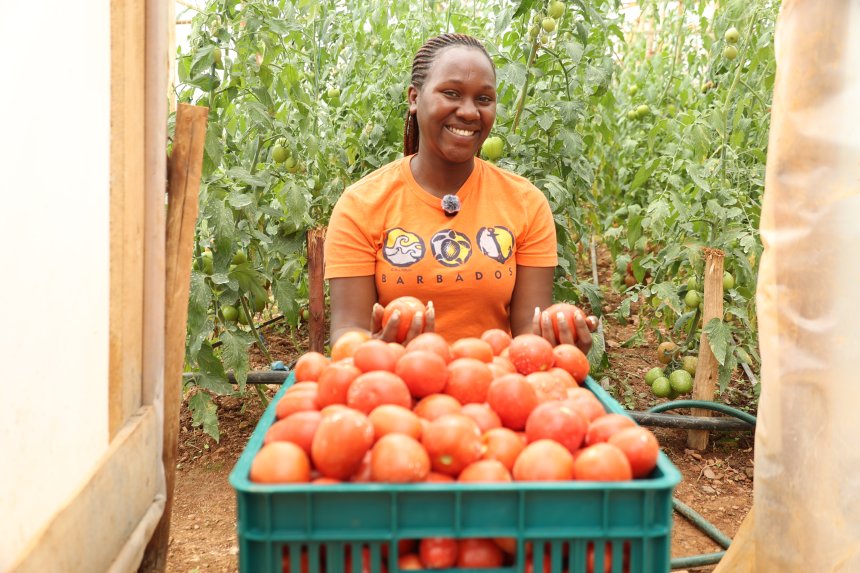
When Mariette looks back at her childhood in the hills of Western Province, Risizi District, Muganza Sector, she smiles at the unexpected twist. She grew up surrounded by rice fields yet agriculture was the last thing she ever imagined calling a career.
“I had never imagined agriculture to be my profession. It was not appealing. It wasn’t aesthetic,”
she said.
As a young girl, Mariette pictured herself wearing a white doctor's coat, becoming an engineer, or standing in a courtroom as a lawyer. That future felt cleaner, more modern far from the mud-stained image of farming she grew up knowing.
Determined never to cross paths with agriculture, she deliberately chose to study Mathematics, Physics and Chemistry (MPC) in high school.
“In mathematics we used to say parallel lines never meet. That was my plan to never cross paths with agriculture,”
she says.
She carried this mindset into university, pursuing Energy Engineering at the University of Rwanda. By her second year, she was already an entrepreneur dabbling in fashion, construction, and recycling. Agriculture was still far from the picture.
But while searching for new business opportunities, she stumbled upon a gap in agriculture one technology could fill.
Mariette began building an agri-tech system designed to monitor and control environmental conditions in greenhouses and open fields supporting precision and climate-resilient agriculture. The idea was strong, but It exposed a reality she had been avoiding
“I realized I couldn’t do that without being a farmer. I had to experience what farmers face every day to solve their problems.”
It was an unexpected turn. She wasn’t proud at first. She felt insecure, unsure of how to explain to people why she had become “an agriculture person.”
“I always felt like I owed people an explanation. I wasn’t convinced myself… but I had trust that the path would make sense someday.” She said.
Her greatest barrier was capital. She had no job and the only income she had was a 40,000 Rwf monthly university allowance.
“That money wasn’t even enough. But I still believed something would work.” She said.
Her breakthrough came when she applied for the Imali Agribusiness program by the Imbuto Foundation and won 10 million Rwf to begin her project.
But even that, she says, “wasn’t enough” for what she needed to deliver.
She continued seeking support, including through BDF, while also acknowledging her second biggest weakness was lack of agricultural skills.
Through Rwanda Extension Agriculture programs and partners like AGRA, FAO, and Mastercard Foundation, she gained technical skills, exposure, and most importantly, access to markets.
She highlights one experience with particular gratitude: “At the AgriShow in Mulindi, they paid for everything our stand, transport, food, accommodation. That changed everything for me.”
Mariette eventually launched Smart Greenhouse, a company combining greenhouse farming and precision agriculture technologies. Her innovations monitor and regulate conditions that influence crop growth directly supporting Rwanda’s 2030 goal of increasing agricultural productivity by 25%.
Today, Smart Greenhouse operates in Gicumbi, Rwamagana, and Bugesera, serving both local and international markets.
The company currently employs 6 permanent employees and 30 temporary worker’s daily
Mariette says agriculture taught her that transparency inspires others.
“We were taught not to talk about money. But I want youth to know there are opportunities.”
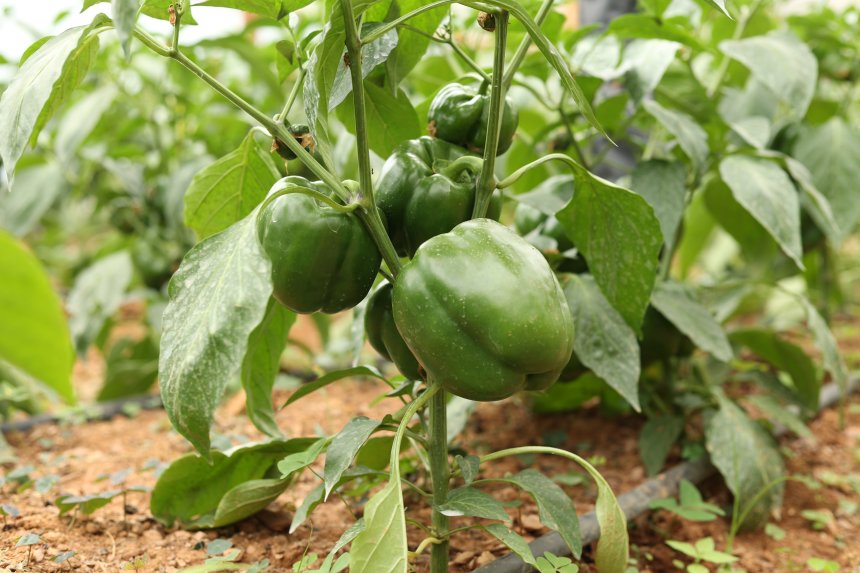
Revenues vary by season tomatoes take four months, sweet pepper 6–8 months, habanero a year, strawberries 8–12 months. But across all three greenhouses. Smart Greenhouse earns between 28–30 million Rwf gross per season, after covering salaries, taxes, and costs.
Her journey mirrors the barriers many young people encounter capital market access and skills and technical capacity. Yet she insists these problems should not discourage anyone.
“Dear fellow youth, agriculture needs you. We eat every day. The population is increasing while the land is decreasing. Agriculture needs creative, innovative youth more than any industry will ever need you.” She said.
Mariette urges partners to support farmers in accessing premium markets: “Middlemen take our produce for very low prices, then sell it high because they access bigger markets. We take all the risk yet earn the least.”
She hopes for collaborations that expand market access both locally and abroad.
Her dream is bold, clear and rooted in the future of controlled-environment agriculture: “In five years, I will be a big greenhouse farmer. Saying my name Mariette will mean greenhouse farmer. You won’t separate the two.”
Mariette’s journey reflects a larger shift in Rwanda’s agriculture at a time when the country must create over 850,000 agri-food jobs by 2030 and still loses up to 40% of horticultural produce due to limited market access. With only 2% of Rwanda’s farmland irrigated and more than 70% of citizens relying on agriculture for their livelihoods, her smart greenhouse model shows how technology can boost productivity and resilience.
By earning 28–30 million Rwf per season from just three greenhouses, she demonstrates the untapped potential of youth-led agribusiness and directly contributes to Rwanda’s national goal of increasing agricultural productivity by 25% by 2030 proving that innovation, not land size, will define the future of farming.
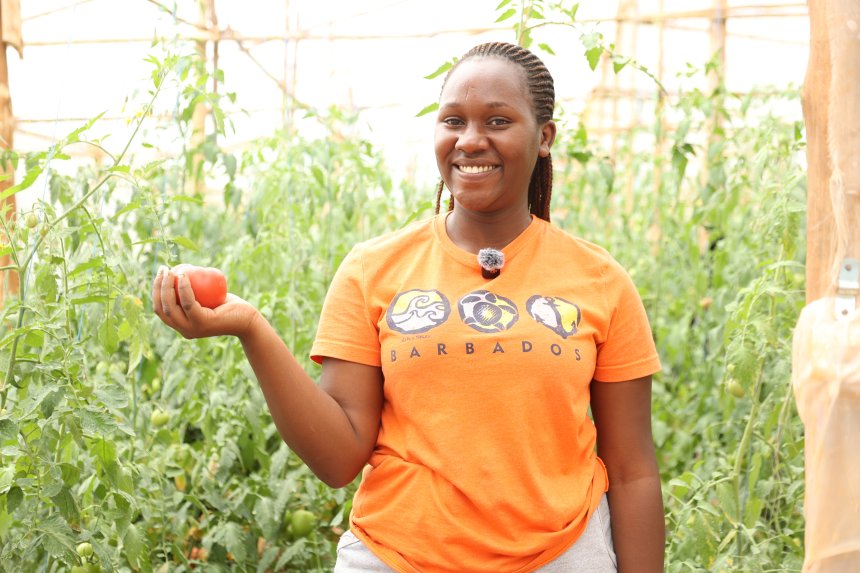 She once vowed never to become a farmer, today she is one of Rwanda’s rising agritech pioneers, turning three greenhouses into a model of productivity, resilience, and youth-led transformation
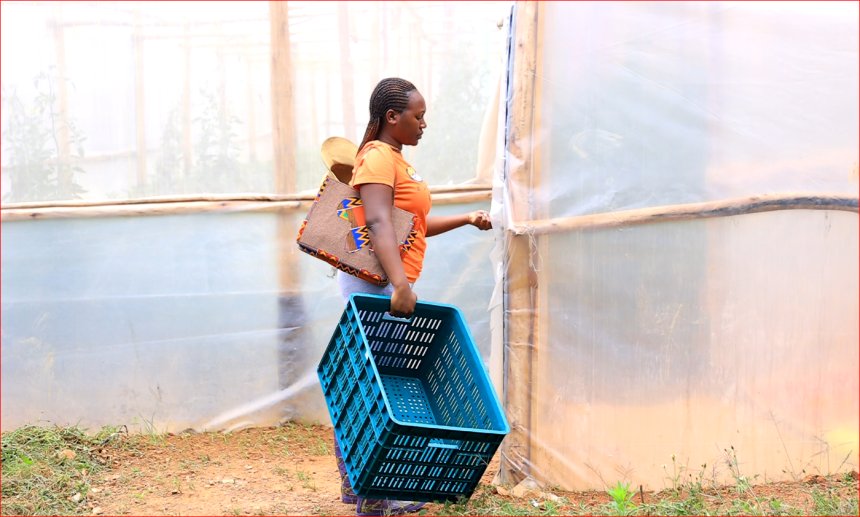 From rejecting farming to redefining it, Bisenge Mico Mariette is using smart greenhouses to prove that innovation, not land size, is the future of agriculture in Rwanda
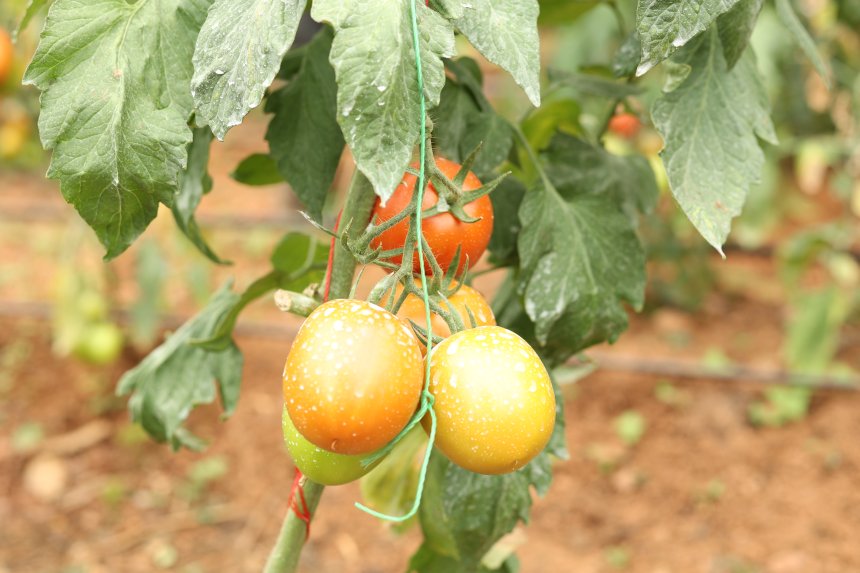 Where others saw mud and struggle, Mariette saw technology and opportunity, her Smart Greenhouse journey is inspiring a new generation to believe that agriculture can be modern, profitable, and powerful