Why Kigali residents are returning to public buses — Inside Rwanda’s new Eco-Fleet System
Kigali residents who had abandoned public buses for years are now making their way back — and they say the experience feels entirely different.

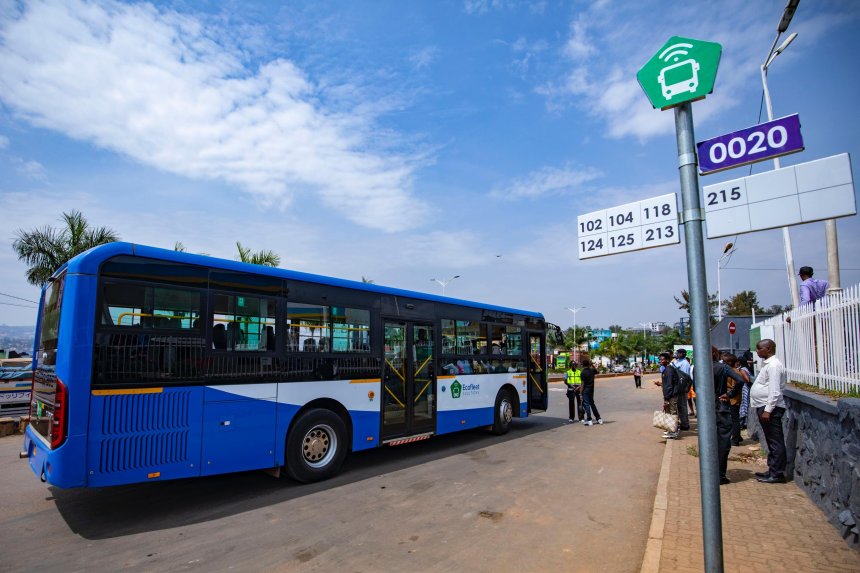
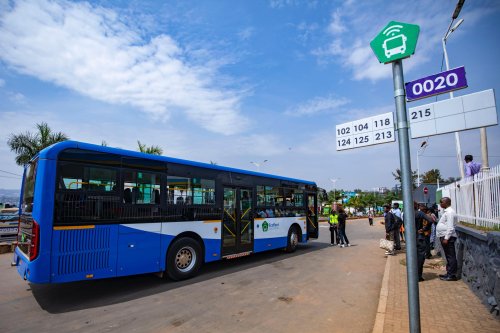
This shift comes after the Government of Rwanda rolled out a new public transport model designed to cut long waiting times, reduce congestion, improve efficiency, and promote a greener city.
Launched nationwide on 2 December 2025, following a Cabinet decision on 28 November 2025, the new system is already reshaping how passengers move across Kigali.
Long Waits and Overcrowding — A Thing of the Past
For years, one of the biggest frustrations among commuters was the unpredictability of public transport. Long queues, delays, and buses waiting to fill up before departure pushed many residents to seek alternative means.
But since the introduction of the Eco-Fleet system, the experience is changing dramatically.
“Even with three people, the bus goes.”
Gateme Jean Marie Dynamique, a Kigali resident, says the improvement is visible.
“Many people used to arrive late at work because of traffic jams, but now things have changed. In the taxi park, a bus used to wait for 70 people just to be full. Now that’s no longer the case — even with three people, the bus goes.”
His testimony reflects one of the system’s biggest transformations: buses now move based on time, not the number of passengers.
Shorter Waiting Times for Passengers
Before Eco-Fleet, some commuters spent more than an hour waiting for a bus — especially during peak hours.
“We used to wait 1 to 1.5 hours.”
Resident Nikuze Alphonsine recalls how difficult it used to be.
“Back in the day, someone could stay at the bus park for one hour or even one hour and thirty minutes. And the buses would stop at every single bus stop.”
She says the new approach, which limits unnecessary stops and follows a regulated schedule, has created a smoother and more predictable journey.
Even the Doubters Are Returning
For some, the change was dramatic enough to bring them back to public transport after years of avoiding it.
“It has been three years… but now everything has changed.”
Mugabo, who had not boarded a public bus in three years, says the new system convinced him.
“It has been three years without using public transport, but now everything has changed. I can encourage people in Kigali to come back to using public buses — it’s now convenient.”
His return signals renewed trust in a system that many Kigali residents had gradually abandoned.
Drivers Are Also Experiencing a New Way of Working
The new model does not only benefit passengers; drivers also operate under new guidelines aimed at improving efficiency.
“We no longer wait for a full bus.”
According to Hakizimana Emmanuel, a public transport driver:
“Things have changed. We used to wait until the bus was completely full before moving. But now, even with 10 people or less, we follow the timing. If the stop is three minutes, we leave after three minutes without waiting for more passengers.”
The shift eliminates delays and allows buses to maintain consistent circulation throughout the day.
Eco-Fleet: The Engine Behind the Reform
The system is managed by Eco-Fleet, a company created by Government of Rwanda, to modernize public transport operations — from scheduling to fleet management.
Its introduction marks one of Rwanda’s biggest investments in a public mobility ecosystem designed for speed, transparency, and sustainability.
“No more long lines or buses sitting idle.”
Abenawe Oswald, the Chief Operations Officer (COO) at Eco-Fleet, says the new model was overdue.
“We no longer have those long lines where people would sit in a bus for two hours without moving. This new system is a best practice that will help Rwandans move more efficiently, especially here in Kigali where the rollout has begun.”
He notes that the system will continue to expand into secondary cities as the model stabilizes in Kigali.
A Greener, More Sustainable Kigali
Beyond improving movement, the system supports Rwanda’s broader development goals — especially under NST2 and Vision 2050, which emphasize sustainable and environmentally friendly urbanization.
By reducing long waits, unnecessary trips, and congestion, the Eco-Fleet model aims to lower emissions and promote cleaner mobility.
Residents Hope the System Will Stay Consistent
While many are pleased with the early changes, commuters say long-term consistency will be the ultimate test.
For now, the early signs point to a city rediscovering the reliability of public transport — and residents who are eager to embrace the improved service.
As Kigali transitions into a more modern and efficient transport hub, public buses appear to be reclaiming their role in daily urban life.