From Small Plot to Agribusiness: How an AGRA-Supported Initiative Changed a Farmer’s Journey in Rwamagana
What began as small-scale pepper farming for 35-year-old Ruhumuriza Jean Paul, a farmer from Mwurire Sector in Rwamagana District, has grown into a structured agribusiness enterprise thanks to training and market linkages provided through an AGRA-supported project implemented by AEE-Rwanda.

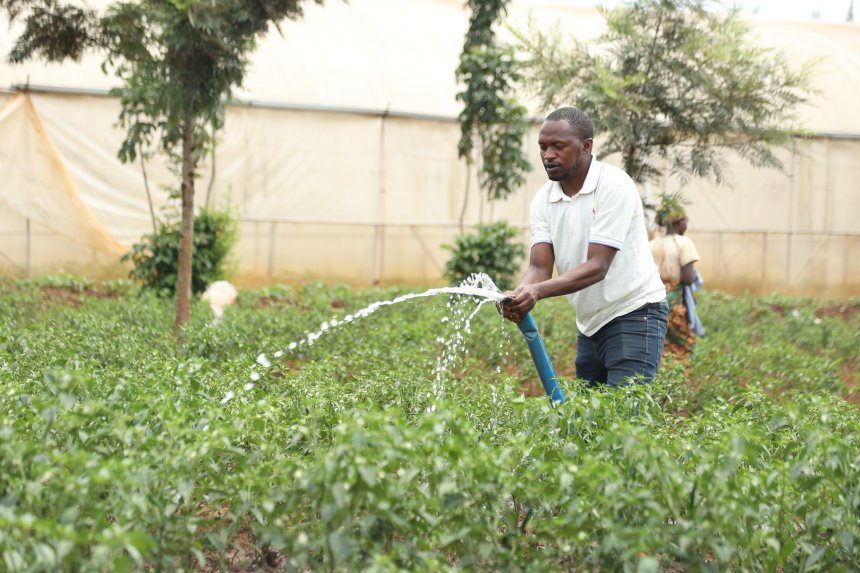
Ruhumuriza recalls that when he first joined farming, he had limited skills on crop management and agribusiness practices.
“I started farming with very little knowledge,” he said. “When I attended the training in Rwamagana under the AGRA project, I gained practical skills on how to manage pepper production and how to connect to reliable markets. That is when I decided to expand the land I was cultivating because I was confident the market was assured.”
He expanded his farmland from 50 ares to one hectare and 10 ares, which he currently uses for pepper production.
Before working with the AGRA-supported project, Ruhumuriza says he struggled to get meaningful returns from farming due to poor agronomic practices and lack of markets.
“Previously, I harvested without proper follow-up on crop management, and I had no stable market, which often led to losses,” he explained. “Today, I monitor my crop from planting to post-harvest and marketing, and the difference is visible.”
Through the programme, he was linked to Virunga as a formal buyer, which has increased his confidence and financial stability.
“Now I am assured of a market, and I can also approach financial institutions because they trust my business,” he said. “I have even learned the importance of taking crop insurance to protect my investment.”
Ruhumuriza expects a harvest of up to 13 tonnes of pepper this season. His production activities currently employ six permanent workers, and during harvesting seasons the workforce rises to 25 laborers.
Financially, he estimates that investments made so far amount to around Rwf 6 million, while projected returns from the ongoing harvest range between Rwf 16 million and Rwf 18 million.
He calls on AGRA and partners to continue expanding training and market opportunities for farmers.
“We need more exposure and technical support so that we can grow further, employ more people, and improve our livelihoods,” he said.
Ruhumuriza also appreciates government and partner support in strengthening irrigation and marshland development infrastructure.
“The infrastructure we have received, especially irrigation facilities have made a big difference in our farming activities,” he said.
Among those benefiting from the pepper farming enterprise is Liliane Tuyishimire, one of the workers employed on the farm. She says her monthly earnings have helped her improve household welfare.
“The money I earn from this job has allowed me to buy small livestock, including pigs and rabbits, I now have 12 rabbits,” she said. “I no longer depend entirely on my husband for financial support because I can meet some of my own needs.”
Liliane adds that the job has also been a learning opportunity.
“We learn a lot from our work here, and together with my colleagues we hope that, in the future, we will also start our own professional farming projects,” she said.
Another worker, Siborurema Jean d’Amour, who has been employed on the farm for a month, earns Rwf 60,000 per month. He says the income has already enabled him to start small livestock farming.
“From my salary, I managed to buy three goats and five chickens,” he said. “Before, I practiced farming informally, but working here has inspired me once I stabilize financially, I also want to start professional farming because I have seen that it can sustain a livelihood.”
According to global agricultural data, Rwanda is an emerging producer of pepper, with about 2,820 metric tonnes of black pepper produced in 2023, ranking the country among the world’s top 20 producers of this commodity. Historical export data also shows that Rwandan pepper exports which totaled more than 721 metric tonnes and generated over US $1 million in revenue during the 2018/19 fiscal year have been on a growth trajectory, signaling expanding market opportunities for farmers.
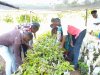
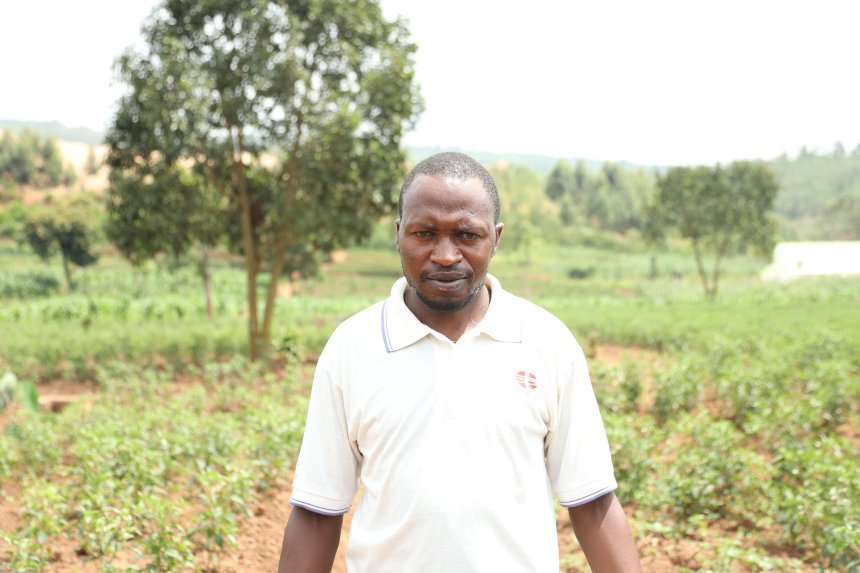 Ruhumuriza Jean Paul explains how agribusiness training helped him transition from subsistence farming to professional pepper production with reliable markets
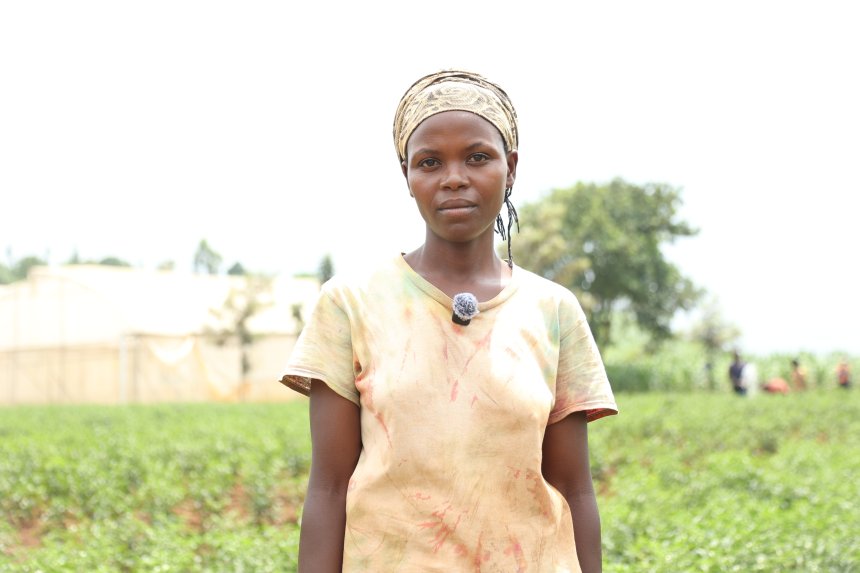 Liliane Tuyishimire, one of the workers on the farm, says her monthly earnings have enabled her to invest in small livestock and improve her family’s welfare
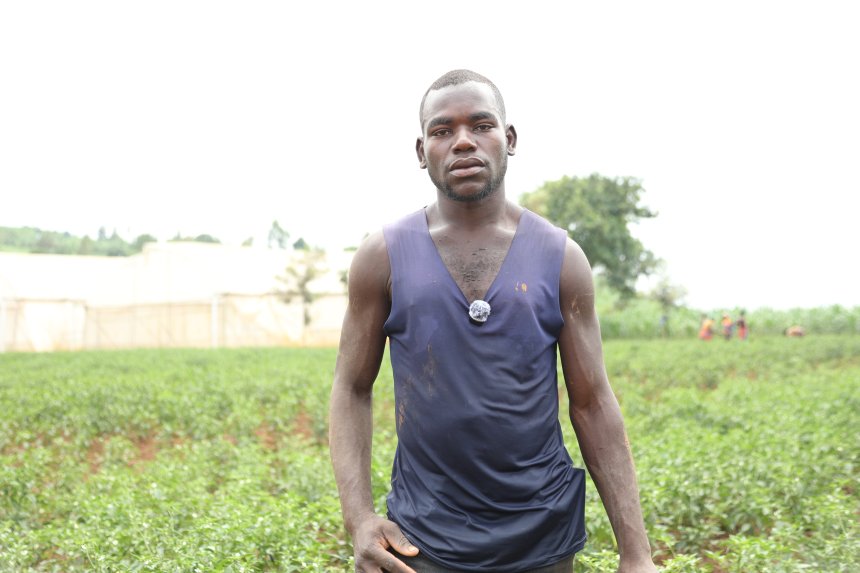 Siborurema Jean d’Amour says the income from his job on the farm has helped him start small livestock farming, strengthening his journey toward financial independence
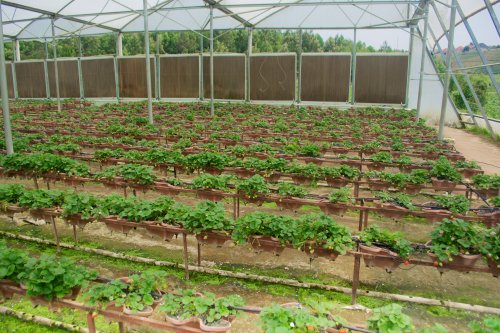
With support from the AGRA-supported project, Ruhumuriza expanded his farmland to 1.1 hectares, increasing productivity and strengthening market confidence