Home-Based Childcare Unlocks Women’s Farming Potential in Rwanda
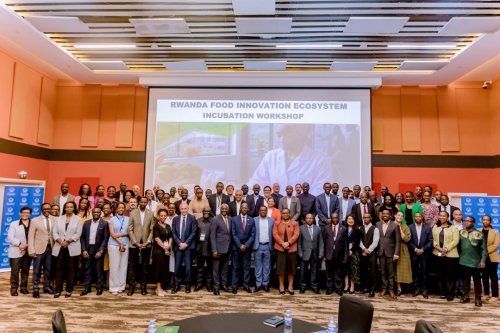
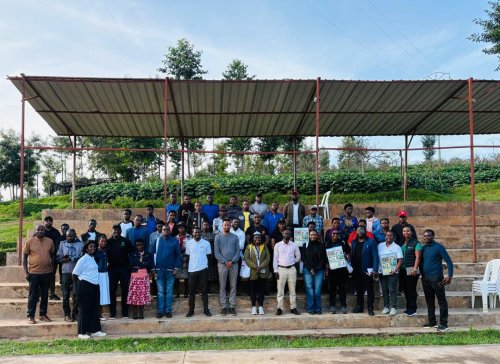
RWAMAGANA, Rwanda | July 10, 2026 — A field visit to two Home-Based Early Childhood Development (ECD) centres in Rwamagana District showed how childcare solutions are helping women overcome barriers to agricultural participation, increase productivity and improve livelihoods. The visit marked the final day of the Mastercard Foundation Agri-Food Systems Portfolio Partner Convening, following two days of discussions in Kigali on scaling childcare models that enable women to engage fully in the agri-food sector.

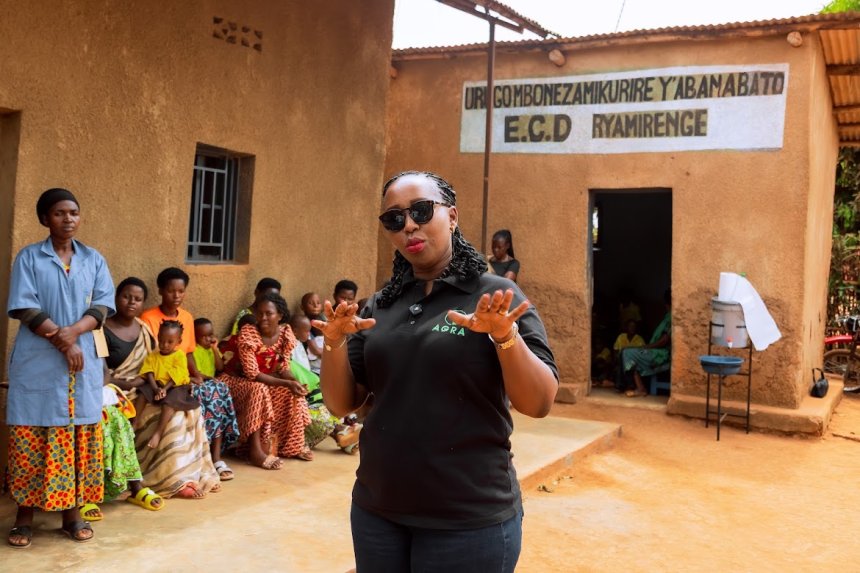
The visit took partners to Home-Based ECD centres in Fumbwe Sector, serving 25 children, and Ryamirenge Village in Munyiginya Sector, where 34 children are enrolled. The centres provided practical evidence of how investments in childcare can strengthen women’s economic participation while improving children’s nutrition, safety and early learning.
At the Ryamirenge Home-Based ECD Centre, supported by AGRA and African Evangelistic Enterprise (AEE) Rwanda through the Mastercard Foundation-funded Youth Entrepreneurship for the Future of Food and Agriculture (YEFFA) programme, children spent the day learning, playing and receiving care while their parents focused on farming activities.

The centre serves 34 children—19 girls and 15 boys, including two children with disabilities—from across Ryamirenge Village. While many children are from families belonging to the Amahoro chilli producers’ group, the centre is open to all families in the community. Parents contribute a small monthly amount to support meals and daily operations, strengthening local ownership and sustainability.
The Amahoro chilli producers’ group comprises 16 farmers, including 11 women, who have received training through YEFFA on improved chilli production, nutrition, entrepreneurship and market access. With childcare support in place, women are able to spend more time on their farms, participate in trainings and improve agricultural productivity.

The Home-Based ECD Centre was established through collective community action. In 2017, women participating in AEE-supported agriculture and nutrition groups realised that childcare responsibilities were limiting their participation in farming. They decided to save transport allowances received during training sessions and, after one year, raised RWF 700,000 to establish the centre.
Jeanette Musabyemariya, a mother of six, community health worker and caregiver who volunteered her home to host the centre, said the initiative has transformed opportunities for women and children in the village.

“When AEE organised us into groups, we learned about nutrition, kitchen gardens and childcare. At that time, we monitored children’s growth under a tree. We realised that mothers could not increase their production while carrying children to the fields.”
“We decided to save the money we received during trainings, and after one year we built this Home-Based ECD Centre. Today, children are safe here while mothers attend trainings and work in their chilli fields,” she added.
For 23-year-old Divine Niyomwungeri, a teen mother and YEFFA participant whose one-year-old child attends the centre, access to childcare support has changed her ability to participate in farming.

“Before my child joined the ECD, I harvested very little because most of my time was spent caring for my baby. I missed farming activities, and my child was often unwell.”
“Now I work in my chilli field with peace of mind because I know my child is safe. I spend more time on my farm, my production has increased, and the income has enabled me to open a small boutique,” she said.
Divine added that the programme has also improved how she cares for her child.
“Through the programme, I learned how to prepare balanced meals and better care for my child. Seeing my child safe and healthy gives me confidence to continue improving my farming business.”
Another YEFFA participant, 19-year-old Diane Ingabire, said the Home-Based ECD centre helped her regain confidence after becoming a mother at a young age.
“I became a mother while I was still a teenager and lacked confidence. I did not know how to properly care for my child or myself. Through the ECD and YEFFA programme, I learned childcare, hygiene and improved farming practices.”
“Because my child is safe at the ECD, I can focus on farming. The extra time has increased my production and income. Today, I own three goats and four chickens that I bought from my farming earnings,” she said.
Diane said the support has given her hope for the future.
“I am grateful to AGRA and AEE for giving me an opportunity to improve my life and become more independent.”
The field visit reinforced the message that emerged during the convening: investing in childcare is also investing in agricultural productivity. By reducing unpaid care responsibilities, Home-Based ECD centres enable women, especially young women and teen mothers, to participate fully in farming, adopt improved practices, access markets and increase incomes while children benefit from quality care and nutrition.

As an implementing partner of YEFFA, AEE Rwanda has supported the establishment of Home-Based ECD centres through awareness creation, savings groups and community mobilisation. The approach is helping women overcome childcare challenges while contributing to improved child nutrition, safety and development.

The experiences from Fumbwe and Munyiginya demonstrated that integrating childcare into agri-food systems programming can help create dignified and fulfilling work opportunities for young women, strengthen household resilience and build more inclusive and productive agricultural communities in Rwanda.
Patricia Uwase, Programme Partner, Gender and Safeguarding at Mastercard Foundation Rwanda, said the field visit demonstrated the power of community-led solutions in transforming the lives of children and women.

“This mother who offered her home has truly contributed to building the country. These children are the leaders of tomorrow. What I have seen today has touched my heart. It is a powerful example of what can be achieved when communities and partners work together,” she said.
She added that Mastercard Foundation, together with its partners, is committed to supporting initiatives that help young women overcome barriers and achieve their potential.

“At Mastercard Foundation, we work with many partners on different solutions. We want to see our girls and young women progress, participate fully in the economy and build better futures,” Uwase said.
Lucia Zigiriza, Senior Partners Coordination Officer at AGRA Rwanda, said the convening provided an important opportunity for partners to strengthen collaboration, share experiences and develop solutions that create greater impact across the agri-food systems portfolio.
“We appreciate the Foundation for bringing us together. It is about strengthening the portfolio and learning from each other’s experiences so that we can all create more impact,” Zigiriza said.