A French court has upheld the 27-year prison sentence given to Eugène Rwamucyo after finding him guilty of involvement in the 1994 Genocide against the Tutsi.
The Paris Assize Court of Appeal in Paris, France, has upheld the 27-year prison sentence given to Dr. Eugène Rwamucyo, for his role in the 1994 Genocide against the Tutsi.


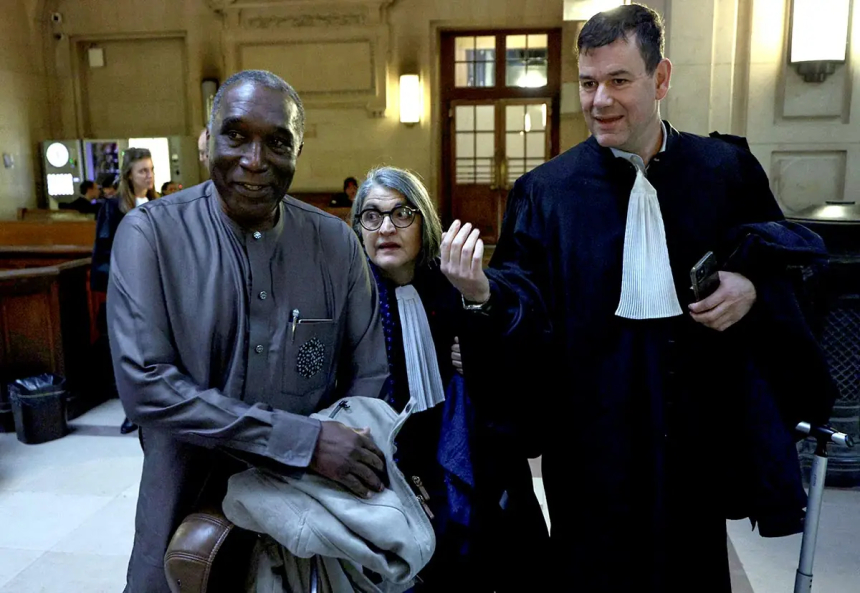
The court confirmed that Dr. Eugène Rwamucyo played a significant role in the planning of the Genocide, the crimes of Genocide, and crimes against humanity.
After convicting him of all these crimes, the Paris Court of Appeal confirmed that the 27-year prison sentence that Eugène Rwamucyo was sentenced to in the first trial in October 2024 remains in effect.
On June 9 2026, the appeal trial of Eugene Rwamucyo began. He had appealed to this court, claiming that he had no role in the killings that took place in the former Butare Prefecture, now in the Southern Province.
During the hearing of both sides, Genocide survivors and other witnesses reiterated Rwamucyo's role in the killings in Butare Prefecture, with the prosecution stating that the evidence presented at the trial clearly shows that Rwamucyo played a role in the killings, and was one of those who expedited them.
Testimony and other court documents filed with the court show that Eugène Rwamucyo participated in meetings where the killings were planned. He is also accused of overseeing the burial of Tutsi who had been killed, and even ordering that the wounded be buried alive or burned.
Earlier this week, the French prosecution asked the court to increase Eugène Rwamucyo's sentence to 30 years in prison. The request was made on July 15, as the trial was about to close. Eugène Rwamucyo and his lawyers also filed grounds of appeal, requesting that Rwamucyo be acquitted, but the court decided to uphold the sentence Rwamucyo received in the first trial.
In September 2009, the Huye Gacaca court tried Eugène Rwamucyo in absentia and sentenced him to life imprisonment after finding him guilty of involvement in the Genocide, where he was found guilty of planning and facilitating the killings committed during the Genocide against the Tutsi.
After the genocide, Eugène Rwamucyo fled Rwanda and took refuge in Côte d'Ivoire, where he applied for refugee status through the United Nations High Commissioner for Refugees (UNHCR), but his request was rejected.
He later moved to France, where he was given various positions in various hospitals in the country. In 2008, Eugène Rwamucyo was offered a permanent position at a hospital in Maubeuge, but his position was terminated in October 2009, when news of Eugène Rwamucyo's role in the Genocide against the Tutsi began to emerge.
Through Interpol, Rwanda issued an international arrest warrant for Eugène Rwamucyo in 2007. At the same time, a French organization that aims to bring survivors of the 1994 Genocide against the Tutsi to justice and bring perpetrators hiding in France to justice, known as the Collectif des Parties Civiles pour le Rwanda, asked the French government to launch an investigation into Rwamucyo.
In May 2010, French police arrested Eugène Rwamucyo in the Sannois area near Paris, while he was attending the funeral of Jean-Bosco Barayagwiza, one of the senior officials convicted of his involvement in the Genocide against the Tutsi by the former International Criminal Tribunal for Rwanda (ICTR).
Although Rwanda requested France to extradite Rwamucyo to Rwanda, the Versailles court rejected this request and instead ordered his immediate release, which was done in September 2010.
The French authorities have decided to investigate him themselves. In 2013, the prosecution opened an investigation into Eugène Rwamucyo for his role in the Genocide against the Tutsi. In 2020, the French prosecution concluded that Rwamucyo should be tried for crimes related to his alleged role in the 1994 Genocide against the Tutsi, a decision upheld by France's investigation chamber in 2022.