Rwanda Steps Up Community Fight Against Illicit Alcohol and Drugs.
Rwanda is intensifying efforts to combat illicit alcoholic beverages and drug abuse, with local authorities calling for stronger community involvement to address the social problems associated with substance abuse.

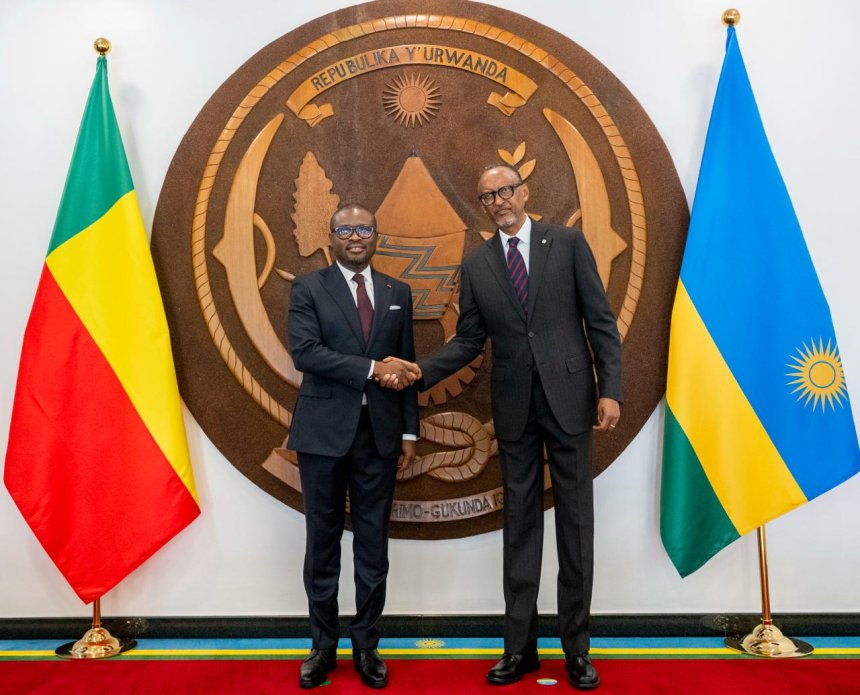
Local Government Minister Dominique Habimana made the call on Saturday, August 29, during Umuganda (a Rwandan monthly community work) in Rwimiyaga Sector of Nyagatare District, where residents were urged to remain vigilant and support authorities in efforts to eliminate illicit alcohol and drugs.
Habimana acknowledged that Rwanda has made progress in tackling the problem but warned that the campaign cannot be considered complete.
“The message is clear and easy to understand. We have been fighting illicit alcoholic beverages and other drugs. I thank the public for understanding the need to eradicate them,” he said.
“We have fought them, but we have not yet to eradicated them. There are still people who may be using drugs and illicit alcoholic beverages. We are here again to request you to keep standing with us in this fight," he added.
According to the minister, the problem extends beyond locally produced illicit drinks. Alcohol smuggled across Rwanda's borders also remains a concern, with authorities warning about its consequences for public health, families and household incomes.
Habimana said substance abuse can contribute to violence and other social problems, while money that could otherwise support families and improve living standards may instead be spent dealing with the effects of addiction.
The government is also placing young people at the centre of efforts to prevent drug and alcohol abuse.
With a new school year approaching, Habimana urged parents and communities to make sure children return to school and remain in an environment free from drugs.
“Our children should be in schools, not in farms or other activities. They should study well and get jobs to develop themselves,” he said.
“Whoever is found employing children will be held accountable because it is illegal," he added.
The minister further linked substance abuse and youth indiscipline to teenage pregnancies, an issue that continues to concern authorities in the Eastern Province.
Officials are calling for closer cooperation among parents, communities and young people to address the factors contributing to the problem.
The campaign also featured a personal testimony from Musa Nshimiyimana, a 35-year-old former drug and alcohol user.
Nshimiyimana said he began using drugs at the age of 15, a habit that eventually disrupted his education, marriage and relationship with the wider community.
“I started using drugs when I was 15 and I dropped out in Senior Three,” he said.
He recalled experiencing repeated difficulties, including imprisonment and stays in transit centres, while some of his former classmates progressed into employment and business.
“I was a threat to society,” he said.
His addiction also contributed to the breakdown of his marriage.
Nshimiyimana, who now earns a living selling water, encouraged other residents, particularly young people, to avoid illicit alcohol and drugs.
“I am thankful that there is a fight to end these drugs,” he said.
Claudine Uwamahoro, a single mother from Rwimiyaga Sector, said protecting children from social problems should remain a priority for families.
“What I want is to educate my children so that they can develop themselves,” she said.
Commissioner of Police Vincent Sano, Deputy Inspector General of Police in Charge of Operations at Rwanda National Police, said communities have an important role to play in maintaining security.

He argued that modern security challenges require residents to take greater responsibility for identifying and addressing problems within their communities.
“Police alone cannot guarantee security. Sustainable security is the one we achieve through community policing,” he said.
Sano said cooperation between communities and security institutions has contributed to declining crime levels in Rwanda.
However, he warned that security challenges are evolving, with drug and alcohol abuse, teenage pregnancies and smuggling through porous borders becoming important concerns.
“We are all concerned about our youth who are putting their lives in danger,” he said.
“You are the strength of our country. We need you to be part of fighting drugs and illicit alcoholic beverages. This country needs you, but you also need to do your part to be sober, healthy and contribute to national development," he said.
More than Rwf2.6 billion in illicit alcohol seize.
The government's intensified crackdown has already resulted in significant enforcement action.
Officials said a recent nationwide operation led to the seizure of illicit alcoholic beverages valued at more than Rwf2.6 billion, while fines imposed during the campaign exceeded Rwf360 million.
Nearly 250 production sites involved in the manufacture of illicit alcoholic beverages were also shut down following inspections.
The figures underscore the scale of the challenge facing authorities as they seek to reduce the production, sale and consumption of illicit alcohol.
Beyond enforcement, officials are emphasizing prevention, education and community participation as key components of the long-term response.
The Umuganda exercise in Rwimiyaga also addressed disaster preparedness as Rwanda enters a period expected to bring increased rainfall.
Residents were encouraged to reinforce their roofs, clear drainage channels and take precautions during thunderstorms.
Authorities cautioned residents against taking shelter under trees during lightning and advised them to avoid risky behaviour such as walking barefoot or using mobile phones during thunderstorms.