18 Rwandan Districts Set to Get New Leaders by Month-End.
Eighteen of Rwanda’s 27 districts outside Kigali are expected to have new leaders before the end of November, after their current leaders failed to appear on the final list of candidates seeking seats on their respective District Councils.
Of the 18 leaders set to leave office, eight are completing the maximum terms allowed by law, while the other 10, including one acting district mayor, are not on the final list published by the National Electoral Commission (NEC).
The District Councils elect the executive committees that lead the districts.
The final list of candidates published by NEC includes seven sitting district mayors, two acting mayors and 10 deputy mayors. Their election to the councils would put them in a position to seek leadership of their respective districts, although they would need the support of fellow council members to secure the top posts.
Each District Council is made up of 17 members: eight general councillors, five women representing the 30 per cent quota reserved for women, and four representatives of special groups, women, youth, people with disabilities and the private sector.
Districts expected to get new leaders
Eight districts are set to have new leaders because their current mayors are completing the terms permitted by law.
They are Gisagara, led by Jérôme Rutaburingoga; Huye, led by Ange Sebutege; Ruhango, led by Valens Habarurema; and Muhanga, led by Jacqueline Kayitare, all in the Southern Province.
The others are Bugesera, led by Richard Mutabazi; Gatsibo, led by Richard Gasana; and Rwamagana, led by Radjab Mbonyumuvunyi, all in the Eastern Province, as well as Nyabihu in the Western Province, led by Antoinette Mukandayisenga.
In another 10 districts, the current leaders do not appear on the final list of candidates seeking election to their respective councils.
They are Dr Sylvère Nahayo of Kamonyi; Patrick Kajyambere, acting mayor of Nyanza; Emmanuel Murwanashyaka of Nyaruguru; and Hildebrand Niyomwungeri of Nyamagabe, all in the Southern Province.
The list also includes Soline Mukamana of Burera, Emmanuel Nzabonimpa of Gicumbi, Claudien Nsengimana of Musanze and Judith Mukanyirigira of Rulindo, all in the Northern Province.
The remaining two are Christophe Nkusi of Ngororero and Dative Kayitesi of Rutsiro, both in the Western Province.
Sitting mayors seeking council seats
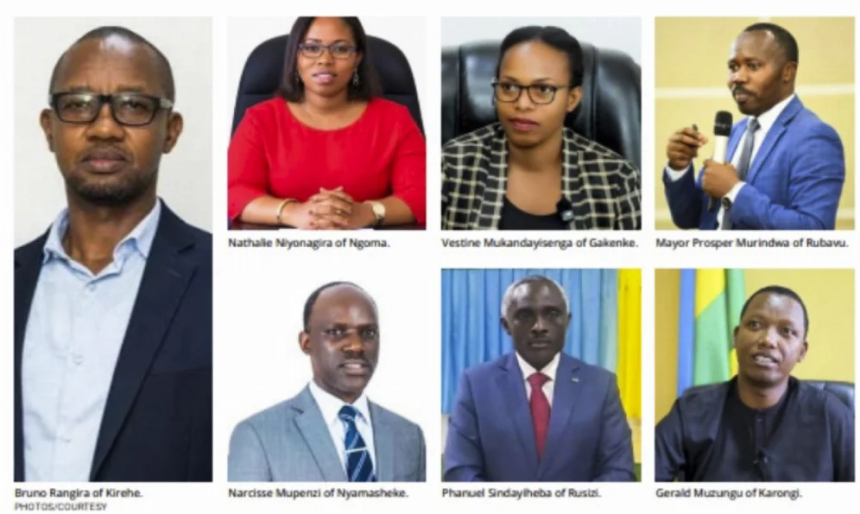
Seven sitting district mayors appear on the final list of candidates seeking to join their respective District Councils.
They are Vestine Mukandayisenga of Gakenke, in the Northern Province; Prosper Mulindwa of Rubavu; Gerald Muzungu of Karongi; Narcisse Mupenzi of Nyamasheke; and Phanuel Sindayiheba of Rusizi, all in the Western Province.
The other two are Nathalie Niyonagira of Ngoma and Bruno Rangira of Kirehe, both in the Eastern Province.
They are joined by two acting mayors: Fred Hategekimana of Kayonza and Henry Kakooza of Nyagatare, both in the Eastern Province.
Several deputy mayors are also seeking election to their respective District Councils.
In the Northern Province, the candidates include Clarisse Uwanyirigira and Theobald Kayiranga of Musanze; Jean Baptiste Nshimyimana and Theophile Mwanangu of Burera; Marie Therese Uwamahoro of Gakenke; Theoneste Rugerinyange of Rulindo; and Parfaite Uwera and Jean Marie Vianney Mbonyintwari of Gicumbi.
Uwanyirigira, Nshimyimana, Rugerinyange and Uwera are deputy mayors in charge of economic development, while Kayiranga, Mwanangu, Uwamahoro and Mbonyintwari are responsible for social affairs.
In the Western Province, the candidates include Emmanuel Uwizeyimana of Rutsiro and Alfred Habimana and Francine Mukakalisa of Rusizi.
Uwizeyimana and Habimana are deputy mayors in charge of economic development, while Mukakalisa is responsible for social affairs.
The Southern Province is represented by Thadde Habimana, deputy mayor in charge of economic development in Nyamagabe, and Denise Dusabe, deputy mayor in charge of social affairs in Gisagara.
In the Eastern Province, the candidates include Richards Kagabo Rwamunono of Rwamagana, Marie Gloriose Mukayiranga of Ngoma, Modeste Nzirabatinya of Kirehe and Jules Higiro, acting deputy mayor of Kayonza.
Rwamunono and Nzirabatinya are deputy mayors in charge of economic development, while Mukayiranga is responsible for social affairs.
Women make up 45.8% of district council candidates.
The final list of candidates seeking seats on District Councils contains 1,167 names, including 535 women, representing 45.8% of all candidates.
Women are contesting across the different categories of council membership, including general councillor positions and seats reserved for women.
The Southern Province has the highest proportion of female candidates, with 168 women among 339 candidates, representing 49.6%.
The Eastern Province follows, with 148 women among 318 candidates, or 46.5%.
In the Northern Province, 109 of the 242 candidates are women, representing 45%, while the Western Province has 110 women among 268 candidates, or 41%.
How the elections will be conducted?
According to the local government election timetable, candidates seeking seats on District Councils began campaigning on November 7, with campaigns scheduled to end on November 21.
Elections for the different categories of District Council membership will take place on separate dates.
The elections are indirect and conducted by secret ballot, with the electoral college varying according to the category being contested.
Elections for the five seats reserved for women will take place on November 17. The electoral college will comprise members of Sector Councils and members of the executive committees of the National Women's Council at sector and district levels.
The eight general councillor seats will be contested on November 21. Their electoral college will comprise executive committees of Cell Councils, Sector Councils, and representatives of the executive committees of the National Women's Council, National Youth Council and National Council of Persons with Disabilities, as well as private-sector representatives at district level.
The four remaining seats; representing women, youth, people with disabilities and the private sector, will be determined on November 14, when the executive committees of the respective groups at district level are elected.
Once all 17 District Council members have been elected, they will vote for their district's executive committee on November 24.
Rules governing the campaigns
Guidelines issued by the National Electoral Commission on November 6 allow candidates to campaign through various media outlets, social media platforms, logos, posters, approved photographs and other materials permitted by law.
On election day, each candidate will be given no more than five minutes to present their manifesto to the electoral college. Presentations will take place at times and venues designated by NEC.
Candidates may put up campaign posters on public and private buildings, vehicles and other locations, provided they have permission from the owners and comply with instructions issued by district or sector authorities.
However, campaign materials are prohibited at health facilities, schools, places of worship, courts and on electricity poles, except where the use of such locations for campaigning is permitted under applicable laws.
Candidates are also prohibited from campaigning through the political parties to which they belong. They may not use national symbols or the symbols of their political parties in their campaigns.
Other prohibited practices include the unlawful use of public infrastructure, insulting or defaming fellow candidates, bribery, violence and discrimination.
Candidates who violate NEC guidelines may receive a warning or be removed from the list of candidates.