Rwanda’s Economy Grows 9.4% in Second Quarter of 2026.
Rwanda’s economy grew by 9.4% in the second quarter of 2026 compared with the same period last year, driven mainly by strong performance in industry and services, according to the figures released by the Ministry of Finance and Economic Planning and the National Institute of Statistics of Rwanda (NISR) on Tuesday, September 15.

Gross Domestic Product (GDP) at current market prices reached Frw7,174 billion, up from Frw5,799 billion in the second quarter of 2025. The Ministry of Finance and Economic Planning and NISR said the growth was recorded across the three major sectors of the economy, with industry expanding by 18%, services by 7% and agriculture by 4%.
Industry was the biggest contributor to the overall growth, adding 3.9 percentage points, while services contributed 3.7 percentage points and agriculture contributed 1 percentage point.
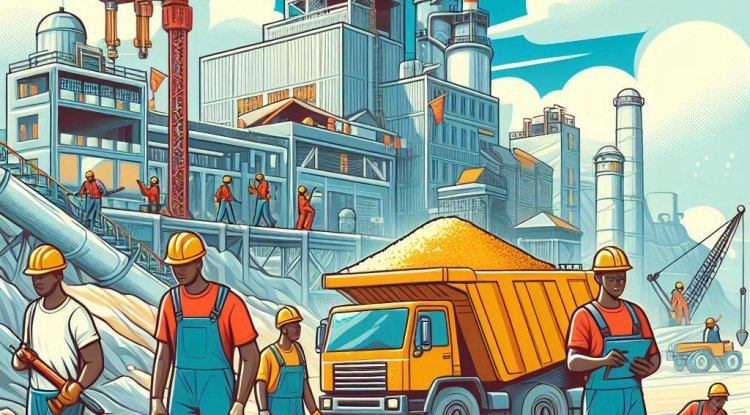
Within the industrial sector, mining and quarrying grew by 26%, while construction activities increased by 24%. Manufacturing expanded by 10%.
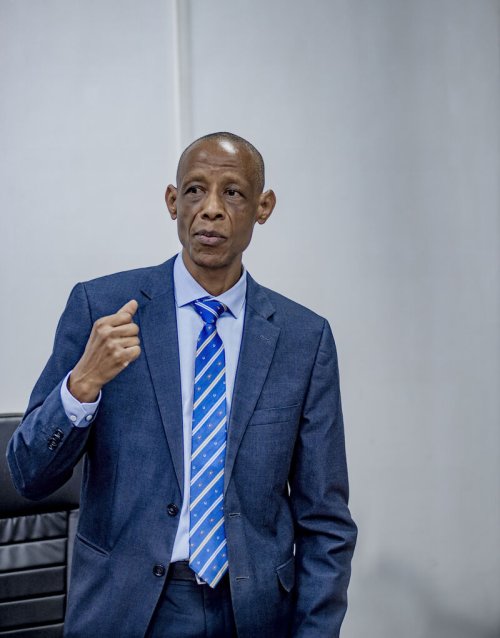
NISR Deputy Director General Jean Claude Mwizerwa said the increase in manufacturing was supported by strong growth in several categories of products.
“Manufacturing output increased by 10%. This was mainly driven by a 51% increase in the production of metal products, machinery and equipment, while the production of non-metallic mineral products such as cement and bricks increased by 22%. Production of textile products also increased by 13%,” Mwizerwa said.
The services sector, which remains the largest component of Rwanda’s economy, accounted for 51% of GDP during the quarter. Industry contributed 23%, agriculture 21%, while net indirect taxes accounted for the remaining 5%.
Among services, wholesale and retail trade increased by 18%, transport services grew by 7%, information and communication services rose by 29%, financial services by 4%, and hotels and restaurants by 5%.
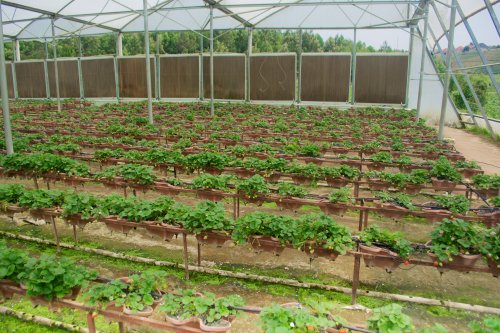
Agriculture expanded by 4% during the quarter. Food-crop production increased by 5%, while export-crop production declined by 20%.
NISR attributed the fall in export crops largely to a 33% decline in coffee production for export, although tea production for export increased by 18%.
Finance and Economic Planning Minister Yusuf Murangwa said the declining share of agriculture in GDP should not be interpreted as a decline in agricultural production.
“Agriculture’s share of the national economy can decline, but this does not mean that agricultural production has also declined. Agricultural output continues to increase, but other sectors are growing at a faster pace. Agriculture is therefore continuing to grow, even though its share of the economy is declining,” Murangwa said.
Murangwa welcomed the 9.4% growth, saying Rwanda’s economy had remained resilient despite disruptions linked to the war in the Middle East.
“This shows that if this war had not happened, our economy would have grown at a rate higher than this. We faced negative effects, but the measures we took helped us. At no point did we run out of petrol or other essential goods that we needed in the country,” he said.
He added that traders were helped to find alternative sources for goods that had previously been obtained from areas affected by the conflict.
“Traders were helped to find other places where they could buy the goods they used to source from areas affected by the war. Therefore, we hope that this did not significantly disrupt us,” Murangwa said.
The latest figures follow 10% year-on-year GDP growth recorded in the first quarter of 2026.
NISR’s latest release also shows that, during the second quarter, household consumption increased by 13%, exports of goods and services rose by 19%, while imports increased by 36%. Gross capital formation grew by 32%.