The Ministry of Education Announces Four More education reforms.
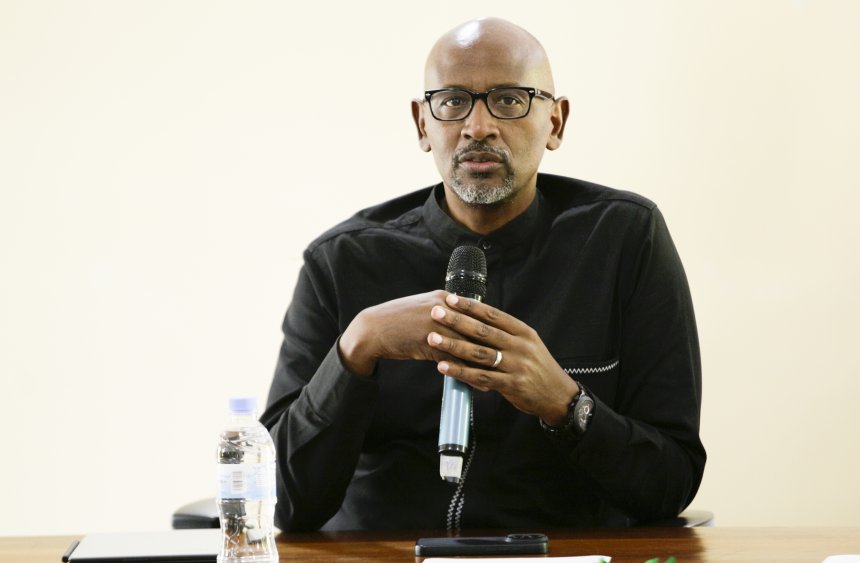
The Ministry of Education has introduced four reforms aimed at improving teaching, learning, improving the teachers work and the well-being of students, as announced by the Minister of Education Joseph Nsengiyumva through the interview with the Rwanda Broadcasting Agency (RBA) on Saturday.

In order to create qualified teachers, this Ministry has made changes to the Teacher Training Colleges (TTCs), where starting from this September, students will no longer study for three years, but will study for five years, graduating with an A1 levelqualification.
The aim is to ensure that primary school teachers are up to date with current educational standards and have university-level qualifications.
“In the program, we will upgrade the category of primary school teachers so that in the future teachers will have a university-level qualification, but we will do this in two stages. Those with A2 will be upgraded to A1, those with secondary school diplomas will be upgraded to A1, and the secondary school will go from A1 to A0. We will do this in 10 years,” Minister Joseph Nsengiyumva said.
Students who wish to study in TTCs will be given time to consider this change, and then decide whether to continue studying in those schools or if they will study elsewhere. It is also expected that current primary school teachers who do not have university degrees will not be fired, but will be provided with courses to help them sharpen the skills needed to perform well.
In the current timetable, time will be added for students to do various activities, so that they can accelerate their skills according to the subjects being taught.
The Ministry of Education has announced that the starting times of classes will not change, but the ending time will change. All teachers will finish teaching at 3:30 pm, while students will be left to do activities that help them understand what they have been taught and return home at 5:00 pm as usual.
This will be done from Monday to Thursday, and on Friday,students will return home at 3:30 pm, while teachers will be left to do other activities aimed at improving their work.
Specifically, Minister Nsengiyumva spoke about the extracurricular activities that students received, saying, "It's a way to reinforce what you've learned without sitting in class. For example, in English, when you sit in class, they teach you grammar, but the extracurricular activities are going to debate clubs. We didn't do that before."
In addition to helping children better understand and comprehend what they are being taught, the Ministry of Education believes that these activities will help students improve their relationships with each other.
Another change announced by the Ministry of Education is the increase in the parental contribution, where the contribution paid for a primary school student's meal was increased from 975 Rwandan francs to 2,000 Rwandan francs.
For secondary school students who go home, the parental contribution, which was Rwf 19,500, will be increased to Rwf 24,000, while for secondary school students who are boarded, the parental contribution, which was Rwf 85,000, will be increased to Rwf 110,000. The government will also support meals provided to students at all levels.
Speaking about this change that will come into effect from January 2027, Minister Nsengiyumva said, "These figures reflect how prices have changed. For example, in schools where the prices were higher than 120 thousand Rwf, but because it was already high, we are saying that the Government will help so that it does not exceed 110 thousand Rwf."
Another request from the Ministry of Education is to increase politeness and avoid bad behaviour in schools, as it affirms that school should be a place where learning takes place, it should be a safe place and those who work there should be characterized by good morals.
Minister Nsengiyumva confirmed that one of the most prevalent problems in schools, whether among students, teachers or other school staff, is the use of alcohol and drugs. Minister Nsengiyumva said that anyone caught with alcohol or drugs will be immediately expelled.
“Schools should be a place where alcohol and drugs are not allowed. They should not be seen there. Anyone caught doing so at school, whether a student, teacher, principal, or kitchen staff, will be immediately expelled. Students, because we have to help children, we will work with local authorities to help them outside of school,” Minister Nsengiyumva spoke about the matter.
Another issue raised by Minister Joseph Nsengiyumva is the behaviour of some students, where they engage in violent acts at school, fight, or injure their peers, sometimes even beating their teachers.
“Another example I can give you is when children come to school and fight, injure others, and you find a child who was injured in a fight and goes to the hospital. In addition to that, there are also children who beat teachers. Things like bringing violence to school, fighting, beating teachers, cannot be tolerated. That child will also be expelled and assisted in other programs outside of school,” he insisted.
Minister Nsengiyumva added that such bad behaviour cannot be tolerated, because a student who hits a teacher may go home and hit his/her parents, especially since teachers and school principals are considered as parents.
“We cannot train students to come to school and fight with teachers and have them accept it. These people will also go home and start hitting their parents. We cannot accept that.,” he added.
Minister Joseph Nsengiyumva also addressed the issue of some students carrying their phones to school to cheat in exams. Minister Nsengiyumva reminded that a student caught with a phone in an exam should be given a zero, and stressed that bringing a phone to school in general is unacceptable.
“Even if it is just one or two, it must be stopped. Because all our efforts to improve the quality of education without propermanners will not be successful,” he said.
Teachers are also reminded to improve their work and educate with all their heart and energy, because quality education is the first to benefit them.