Democrats Win Control of US Congress in Major Setback for Trump.
The Democratic Party has won control of both chambers of the United States Congress, defeating President Donald Trump’s Republicans in the November 3 midterm elections and setting the stage for increased scrutiny of his administration during the final two years of his presidency.

The Associated Press and Reuters confirmed that Democrats had secured majorities in the House of Representatives and the Senate, marking a significant shift in Washington after two years of Republican control.
The results were still being finalised in some races on Wednesday, November 4. Early tallies reported by the Associated Press showed Democrats with 54 Senate seats compared with 44 for Republicans, while contests in Mississippi and Alaska remained undecided. The exact final balance in both chambers was therefore not yet established.

The Democratic gains included unexpected victories in states that have traditionally supported Republicans. In Kansas, Democrat Adam Hamilton defeated incumbent Republican Senator Roger Marshall, becoming the first Democrat elected to represent the state in the Senate since 1932.
In Texas, Democrat James Talarico won a Senate seat, ending a decades-long Republican hold on the state's Senate representation. Democrats also secured victories in South Carolina, North Carolina, Ohio, Iowa and Maine, where Democrat Troy Jackson defeated Republican Senator Susan Collins, ending her nearly 30-year Senate career.
The election was widely viewed as a referendum on Trump's leadership, with voters expressing concern about the cost of living, the war involving the United States and Iran, and allegations of corruption in government.
Reuters reported that these concerns helped drive voters in traditionally Republican areas towards Democratic candidates, including in heavily Latino communities in Texas and Kansas.
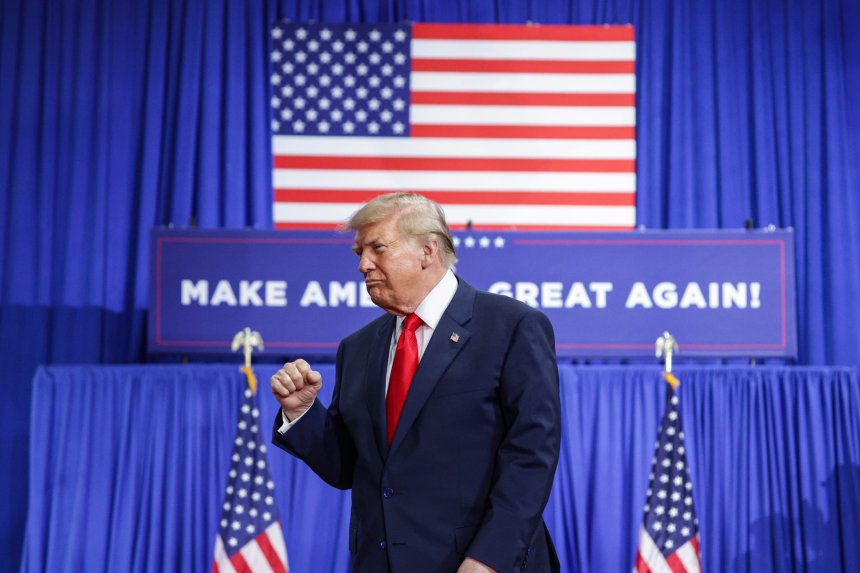
Trump acknowledged the Democratic victory in an interview with Fox News, congratulating the party and saying he was willing to work with its leaders on issues such as immigration. However, he warned that he would veto legislation he considered unreasonable.
The president also posted on social media that Republicans would have won by a landslide had he been on the ballot.
Democratic control of Congress is expected to reshape the remainder of Trump's term. Once the newly elected lawmakers take office in January 2027, Democrats will have greater powers to investigate the administration, demand information and scrutinise the president's policies and appointments.
The Democratic-controlled Senate will also be able to block presidential nominees, including appointments to the federal judiciary, should vacancies arise. Party leaders have indicated that investigations into the administration and its associates will be among their priorities.
Chuck Schumer, the Democratic leader in the Senate, described the election as a major change in the country's political landscape, saying Americans had voted for change and that Democrats now had a responsibility to deliver.

Hakeem Jeffries, who leads House Democrats, is expected to play a central role in directing the party's agenda in the House, while Schumer is positioned to lead the Senate majority.
The outcome gives Democrats an opportunity to exercise greater oversight over Trump's administration and challenge parts of his legislative agenda. It also marks a return to divided government, with the presidency held by Republicans and both chambers of Congress controlled by Democrats.