A Woman Arrested Over Dressing Was Wronged: President Kagame.
President Paul Kagame has said a woman arrested by police in August 2026 over alleged indecent dressing had done nothing wrong, urging Rwandans to show understanding when officers make mistakes due to fatigue.

The incident sparked debate on social media after videos circulated showing two police officers handcuffing the woman and placing her in a vehicle, amid wider discussions about dress codes for people attending entertainment events.
Following public outcry, the Rwanda National Police announced that the two officers had been arrested and that the woman had been cleared. The force also said officers had been instructed and warned against similar incidents.
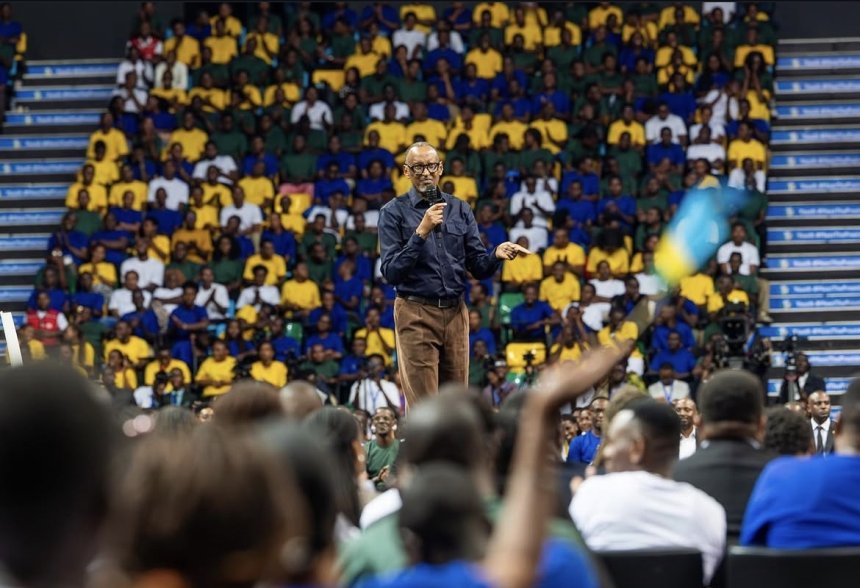
Speaking on October 21, 2026, during an interaction with thousands of young people at BK Arena, Kagame said he had contacted Inspector General of Police CG Felix Namuhoranye after seeing the controversy surrounding the woman’s arrest.
Kagame said Namuhoranye told him that the officers had misunderstood the instructions. He asked to see the woman’s photograph and concluded that she had been treated unfairly.
“I asked him: ‘What offence did this woman commit? Looking at her, I see nothing that should be considered inappropriate for public display. What is your problem?’” President Kagame said.
The President said the incident appeared to have involved an officer who may have been exhausted, calling on the public to make allowances for police officers who sometimes work long hours under difficult conditions.
“Sometimes, understand them and forgive them. They start work early and get tired. They spend their days dealing with many challenges, as you know. Sometimes they reach a point of exhaustion and end up making a mistake,” he said.
President Kagame said societies establish their own boundaries and expectations about acceptable behaviour, including how people should dress in different settings.
He used the example of people at the beach, where certain clothing may be considered normal but could attract surprise or disapproval if worn in other public settings.
“At the beach, where people feel comfortable, you may meet others and dress in a way that is acceptable there but different from what is expected elsewhere. If someone dressed as though they were going to the beach suddenly appeared here, would that be acceptable? People would turn around and ask what had happened to them,” he said.
He argued that debates about clothing often focus disproportionately on women, despite similar expectations applying to men.
“Most people direct these discussions only at women. It applies to men, too. Imagine a man walking in as though he had just come from the gym, with nothing on his upper body, and sitting among us. People would ask what had happened to him and whether he had forgotten where he was going,” President Kagame said.
The President said societies develop rules, laws and cultural norms that shape what people consider acceptable. When someone introduces practices that conflict with those expectations, tensions can arise between the individual and the wider community.
He compared this process to the body rejecting a foreign object, explaining that a healthy society also tends to resist practices it considers incompatible with its established way of life.
President Kagame said disagreements over cultural expectations should not turn into conflict. Instead, people should discuss their differences and reach a shared understanding of what should be accepted.
He urged young people to understand how their society functions and to speak out when they believe certain practices being introduced into the culture are harmful.
The President added that every culture has its own values and taboos, and that discussions about what should or should not be accepted should lead to consensus rather than confrontation.