From Uncertainty to Prosperity: How Youth in Kayonza Are Building Their Future Through Agriculture
KAYONZA, Rwanda | July 15, 2026 – What began as an announcement inviting young people aged between 18 and 35 to join an agricultural project has become a thriving youth-led agribusiness in Kayonza District. Today, members of the Dufatanye Youth Group in Rugendabari Cell, Mukarange Sector are increasing agricultural productivity, creating jobs, improving household nutrition and building sustainable livelihoods.



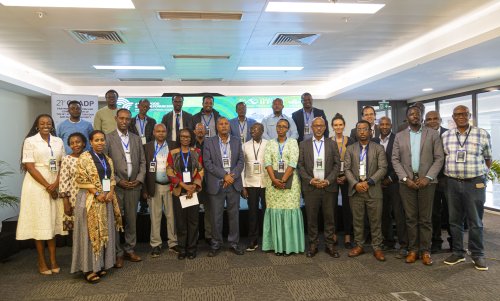
Their story was shared during the Mastercard Foundation Agri-Food Systems Portfolio Steering Committee Learning Visit, where senior leaders from consortium partners visited the group to witness firsthand how investments in youth are transforming lives through agriculture.
The Dufatanye Youth Group is supported through the SERVE Project, a five-year (2023–2027) programme funded by the Mastercard Foundation under its Young Africa Works strategy. The programme aims to create and sustain 80,000 dignified and fulfilling work opportunities, with a strong focus on young women.

SERVE seeks to build a resilient, sustainable, gender-equitable and inclusive entrepreneurial environment that enables young people to realize their potential through opportunities in agricultural value chains. The programme is implemented by Care International in Rwanda through a consortium of four partners DUHAMIC-ADRI, Profemmes Twese Hamwe,Association of Microfinance Institutions in Rwanda (AMIR), and Urwego Finance targeting youth aged 18 to 35, including young women, persons with disabilities and refugees across 10 districts in Rwanda.
The programme focuses on strengthening youth participation in agricultural value chains including chili, tomatoes, French beans and poultry through skills development, financial inclusion, productive assets and market linkages.
Established in 2024 under SERVE, the Dufatanye Youth Group initially brought together young people engaged in horticulture and poultry farming. Through the project, members have received training, farming equipment, seeds, financial literacy support and access to markets, enabling them to develop sustainable agribusiness enterprises.
According to Niyomuhoza Brigitte, the group’s leader, many members initially joined without fully understanding the nature of the support they would receive.

“We were told there was a project coming to support young people, but we were not used to receiving support through agriculture. When some members realized they would not receive direct cash assistance, they decided to leave. Twenty-five of us chose to stay because we believed in the opportunity before us,” she recalled.
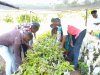
The remaining members embarked on a journey that transformed their understanding of agriculture. They received training in Good Agricultural Practices, financial management, leadership, market access, gender equality, safeguarding and inclusion. They were also supported with seeds, farming equipment and a greenhouse measuring 2.4 ares, while cultivating seven ares under open-field production.
“We started with a demonstration plot where we learned how to manage our resources, lead our group, calculate profits and expenses, and improve our agricultural practices. We received seeds and farming equipment, while local leaders supported us with land where our greenhouse was constructed,” Brigitte said.
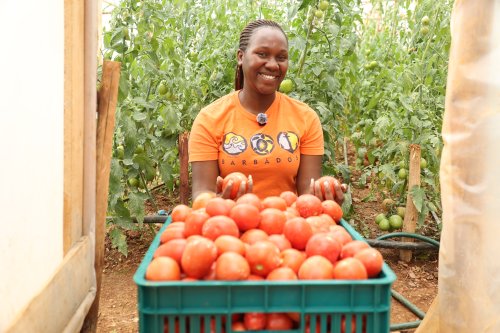
Their first tomato harvest yielded 2.5 tonnes and generated approximately RWF 2.5 million from greenhouse and open-field production.

“The results surprised us because we had never imagined that such a small piece of land could generate that much income. It gave us confidence, and even those who had left the group started coming back after seeing what we had achieved,” she said.
Rather than spending their earnings, members invested in expanding their businesses. After setting aside RWF 940,000 for agricultural inputs for the next production season, they ventured into poultry farming by purchasing chicks at RWF 3,000 each. Every member received 16 chickens, including layers and broilers.
“The chickens have helped us improve household nutrition, fight child stunting and provide manure for our farms. We learned that every investment can create another opportunity if we plan well,” Brigitte explained.
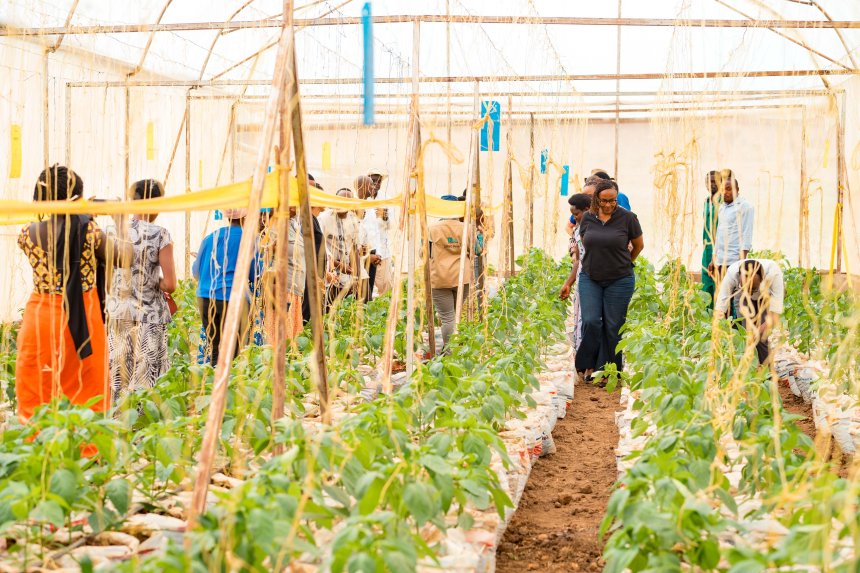
The group continued to grow. During the second production season, members harvested 1.3 tonnes of sweet peppers from the greenhouse, generating RWF 1.8 million, while open-field carrot production generated an additional RWF 700,000. After deducting production costs, members shared profits amounting to RWF 1.3 million.
In another production cycle, the group harvested 2.7 tonnes of tomatoes, and their combined agricultural activities generated RWF 3.17 million in total revenue.
Driven by their success, members leased half a hectare of land for two years at a cost of RWF 800,000 to expand production. Today, the group employs two permanent workers, including a security guard and an irrigation attendant, alongside seven seasonal labourers, creating employment opportunities within the community.
For Twizerimana Germaine, a mother of two and one of the group’s members, the greatest contribution of SERVE has been knowledge.
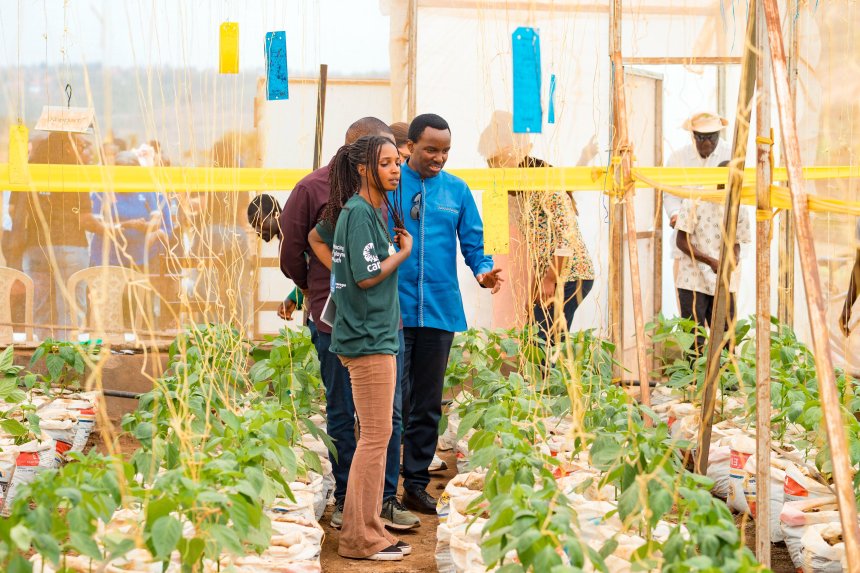
“Before joining the project, I cultivated four ares of land, but I earned almost nothing because I lacked the necessary skills. The greatest thing we have gained from this project is knowledgeeven more valuable than the money we earn,” she said.
Through improved farming practices and investment, Germaine has expanded her farming activities to 32 ares and earns about RWF 1.5 million every season.
Speaking during the field visit, AGRA Rwanda Country Director Jean Paul Ndagijimana said the delegation came to listen directly to beneficiaries and understand how investments are translating into improved livelihoods.
“Many of the people who have come with me are senior leaders from our partner organizations. We came to see whether the support you receive is helping you achieve your goals and to listen to your testimonies so we can understand how your incomes and livelihoods are improving,” he said.
Dr. Patrick Karangwa, Director General of Agriculture at the Ministry of Agriculture and Animal Resources (MINAGRI), commended the young agripreneurs for their commitment.
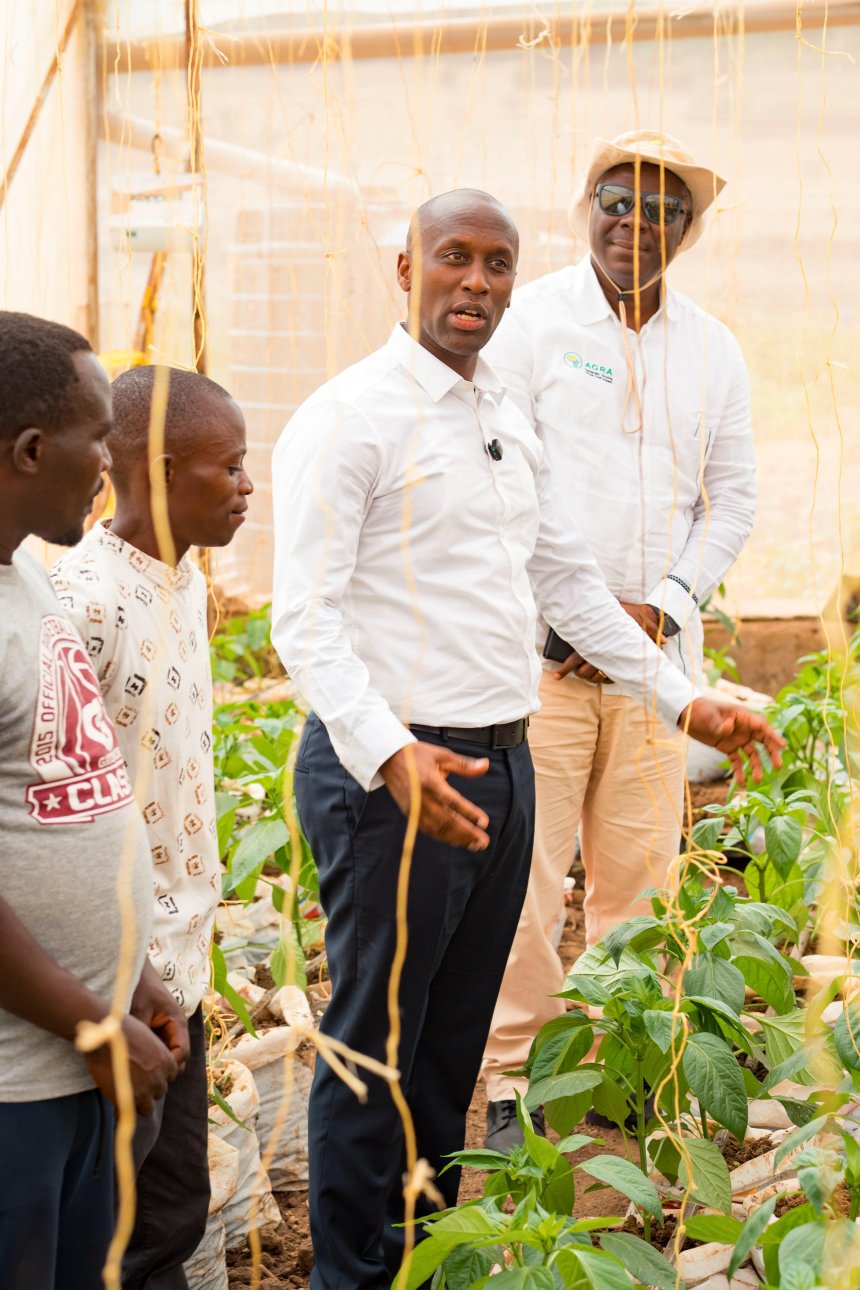
“I thank you for your commitment and participation. We want to see farmers who do not give up but continue striving to achieve meaningful results. I also thank all our partners for their continued support. Let us keep moving forward together,” he said.
The journey of the Dufatanye Youth Group demonstrates how programmes such as SERVE are transforming agriculture into a pathway for dignified employment. From 25 young people who chose to believe in an opportunity, the group has become an example of what can be achieved when youth are equipped with skills, resources and partnerships to succeed.