Rwanda Senate Raises Concerns Over Public Funds Management.
Rwanda’s Senate has raised concerns over persistent weaknesses in the management of public finances and government assets, questioning why nearly Rwf475 million is still being wasted, while other payments are made without supporting documentation or exceed the amounts agreed with contractors.

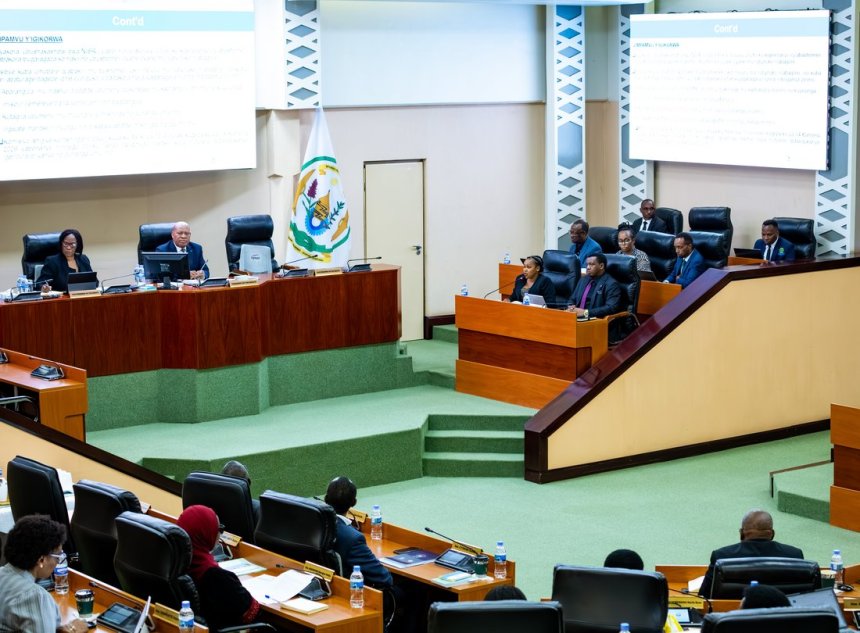
The concerns were raised by the Senate Committee on Economy and Finance while presenting its assessment of the Auditor General’s report for the financial year ended June 30, 2025. During that period, the Office of the Auditor General audited public expenditure amounting to Rwf8 trillion.
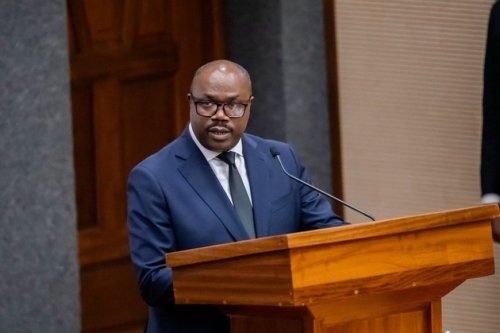
Presenting the committee’s findings, its chairperson, Senator Fulgence Nsengiyumva, acknowledged improvements in the number of public institutions receiving clean audit opinions in several areas, including financial reporting, compliance with laws and regulations, and the efficient use of public resources.
The proportion of institutions receiving clean opinions on financial reporting rose to 97 per cent, from 94 per cent in the previous financial year. Compliance with laws and regulations improved to 83 per cent from 75 per cent, while performance in the efficient use of public resources increased to 79 per cent from 66 per cent.
However, Nsengiyumva said weaknesses remained, particularly in ensuring that public money is spent for its intended purposes.
During the financial year under review, Rwf39.11 million was spent without supporting documents explaining or justifying the payments. This was a decline from Rwf136.68 million in the previous year.
“Although the amount has decreased, no money should be paid out without supporting documents,” he said.
The report also found that Rwf474.65 million had been wasted, down from Rwf1.9 billion in the previous financial year, representing a reduction of about 75 per cent.
Nsengiyumva said the remaining amount was still a cause for concern.
“Even hearing that Rwf475 million has been wasted is itself a sign of a problem,” he said.
Contractors paid more than agreed amounts
The Auditor General’s report also identified more than Rwf86 million paid to contractors in excess of the amounts they were supposed to receive during the year ended June 2025.
Nsengiyumva described the practice as a serious weakness in public financial management, despite the significant reduction from about Rwf3 billion recorded in the previous year.
“Payments exceeding the amounts that should have been paid amounted to Rwf86 million. They had previously reached Rwf3 billion, so there has been a reduction. However, paying an additional Rwf86 million beyond what was due is still a serious weakness. We therefore find that, although these shortcomings are declining, weaknesses in public financial management remain,” he said.
WASAC has not received a clean audit opinion in five years.
The committee chairperson said some public institutions, both commercial and non-commercial, had improved their performance, while others continued to receive audit opinions classified as ‘adverse’ or ‘qualified’.
He singled out WASAC Group, saying it had failed to obtain a clean audit opinion for five consecutive years.
“We can point to problems at WASAC. Over the past five years, it has not received a clean audit opinion even once. This shows that measures need to be taken,” he said.
The committee also noted that some institutions had improved from adverse audit opinions to qualified opinions, while others had progressed to clean opinions.
Among the challenges affecting several public institutions are delays in implementing projects financed by development partners, even after funding agreements have been signed.
The problem was identified at institutions including the Rwanda Transport Development Agency (RTDA) and the Rwanda Development Board (RDB).
Nsengiyumva said the delays were often linked to slow preparation of feasibility studies, lengthy procurement processes and delays in relocating residents affected by projects.
“Such delays often arise because feasibility studies take time to prepare. A development partner may have signed an agreement and committed funding, but the feasibility study has not yet been completed. Procurement may also take too long, or implementation may be delayed by the relocation of residents,” he said.
The committee also pointed to delays in the execution of contracts between government institutions and private contractors, saying the problem needed to be addressed.
Another concern involved advance payments made to contractors before they had been shown the sites where they were expected to carry out the work.
The report cited a case in which a contractor received Rwf15 billion before starting the work.
The committee further raised concerns about projects being launched before residents affected by them had received the compensation they were entitled to. It stressed that the law governing expropriation in the public interest must be respected.
Senate President François-Xavier Kalinda said the Senate would continue following up on the issues identified by the Auditor General and monitor whether the recommendations were implemented.
“These matters will be handled by the different Senate committees. Each committee will examine the parts of the report that fall within its mandate and follow them up,” he said.