Government Launches Agricultural Mechanization Training for Youth Under YEFFA Project
The Deputy Minister for Education, Science and Technology, Wanu Hafidh Ameir has officially launched the VETA Agricultural Mechanization Training Program implemented under the YEFFA (Youth Entrepreneurship for the Future of Food and Agriculture) project through a partnership between the Government of Tanzania, the Vocational Education and Training Authority (VETA) and AGRA.

The launch took place at VETA Kihonda in Morogoro, where the Deputy Minister toured the training facilities and witnessed ongoing practical sessions that have already benefited 700 youth trainees through the YEFFA project.
The training focuses on modern agricultural skills, including the use of mechanized farming equipment, irrigation technologies, and value addition such as the fabrication of agro-processing machines.
Speaking during the visit, Wanu congratulated the graduates of the short term training programs, encouraging young people to view agriculture as a viable and profitable business sector.
She urged youth to change the long held perception that farming is an activity for the poor, emphasizing that modern agriculture has the potential to create wealth when approached with innovation and strong branding.
During her visit, the Deputy Minister also interacted with female trainees and expressed her admiration for their growing involvement in technical fields, particularly in operating heavy agricultural machinery used for land preparation and harvesting.

Deputy Minister commended VETA and AGRA for translating Tanzania’s national development vision into practical action through skills development and youth empowerment.
Speaking at the event, AGRA Tanzania Country Director, Vianney Rweyendela, said the organization is encouraged by the early progress made through the initiative, noting that creating employment opportunities for young people remains a central priority.
He explained that about 65 percent of Tanzanians depend on agriculture for their livelihoods, with 70 percent of them being women. For the sector to significantly contribute to economic growth, he noted, agriculture needs to grow by at least 10 percent annually.
Rweyendela added that the mechanization training aligns with the government’s Building a Better Tomorrow (BBT) initiative under the 10/30 agenda, which aims to transform agriculture through youth participation and increased investment.
He noted that as agricultural development progressed, stakeholders realized that traditional tools alone could not deliver the needed transformation.
“That is why we partnered with VETA to equip young people with practical skills in mechanization, irrigation, and agricultural value addition so they can drive modern farming,” he said.
He emphasized that AGRA’s broader goal is to create sustainable employment opportunities for youth while supporting Tanzania’s Vision 2050 development agenda.

VETA Director General, CPA Antony Kasore, said the program is part of the broader BBT initiative and aims to equip young people with practical agricultural skills, including mechanization, irrigation systems, and post harvest handling.
Kasore told the Deputy Minister that AGRA Tanzania has invested Tsh 3.5 billion to support the implementation of the program, which will be expanded to vocational training centers across all regions of the country.
“The objective is to produce skilled technicians who will not only apply these skills but also transfer knowledge to other young farmers,” he said.
The YEFFA project targets to train more than 5,600 youth across Tanzania, with 700 young people already graduating from the agricultural mechanization course.
The program is expected to contribute to improved agricultural productivity, job creation, and the transition toward modern, technology-driven farming.
Morogoro Regional Commissioner Adam Malima said the government has long emphasized agriculture, but the past five years under President Samia Suluhu Hassan have seen stronger implementation of agricultural development programs targeting citizens, particularly youth.
He noted that Morogoro region offers numerous agricultural opportunities and encouraged young people interested in grass production for livestock feed to seek support from his office, describing it as a profitable and reliable agribusiness opportunity.
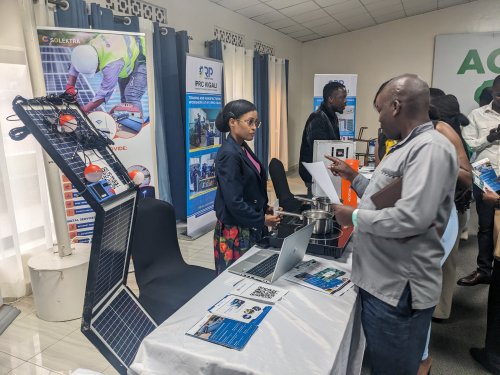
The launch event also showcased innovations developed by the 700 graduates of the YEFFA short term training program, many of whom demonstrated practical solutions and technologies as they prepare to enter the agribusiness sector
Story by Roquefields Sailo