In Nigeria, a fake government agency was established in the office of the President.
Nigerian President Bola Ahmed Tinubu has ordered an investigation into alleged corruption, leading to the establishment of a fake watchdog in his government which led to give the agency a government grant of $950,000, or 1,388,406,000 Rwandan francs.

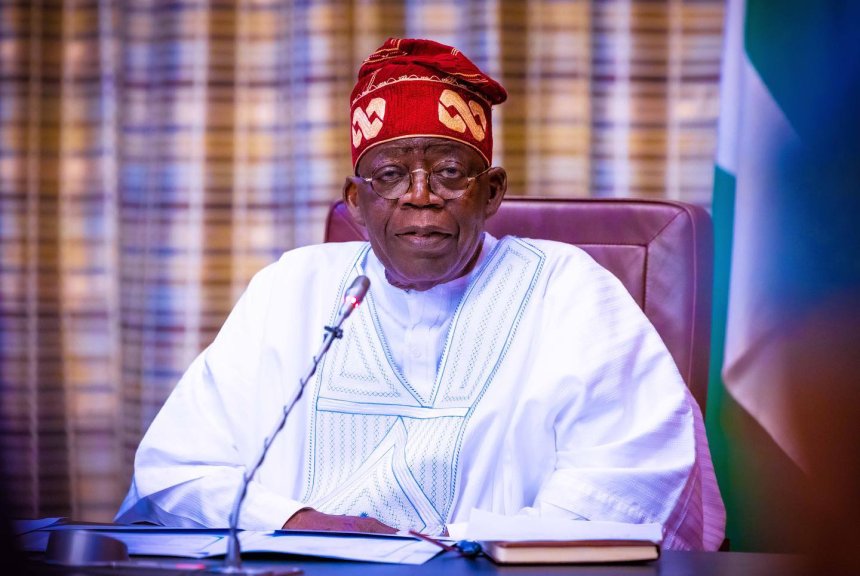
The Office of the President of Nigeria has announced that a letter from the Chief of Staff of the Presidency indicates that the "Presidential Foreign Intervention Promotion Council" (PFIPC) was established in a sham manner, meaning it is not yet operational.
The Nigerian National Police immediately launched a manhunt for Adeniyi Adeyemi Matthew, who was posing as the CEO of PFIPC, to be charged with forgery, false pretense, and other related offenses.
Before going into hiding, Adeniyi Adeyemi Matthew had told local Nigerian media outlets that he was innocent and feared his life might be in danger.
Adeniyi Adeyemi Matthew had also said that he would agree to appear in court to prove that the institution was legally established.
On the other hand, he himself accuses some senior Nigerian government officials of corruption during his appointment as the CEO of PFIPC and of seizing government funds earmarked for that agency, which the President's office denies.
Adeniyi Adeyemi Matthew, explained that the agency was established in 2024 to attract foreign investors to invest in Nigeria, but to date, no known activity has been carried out by the agency.
Two other senior officials of the agency have also begun questioning by the Nigerian National Police.
This week, President Bola Ahmed Tinubu immediately has ordered the Independent Corrupt Practices and Other Related Offences Commission (ICPC) to launch an investigation into the manner in which the agency was set up, and demanded that he be given a report on the matter within 30 days.
The journalists found that the fake agency was headquartered in a building that houses some of the ministries and other government agencies in the Nigerian capital, Abuja. The agency also had accounts opened at the Central Bank of Nigeria. In the 2026-2027 budget, the agency was allocated $950,000, or 1,388,406,000 Rwandan francs.
However, the Accountant-General's Office denied that the PFIPC had any accounts with the Central Bank of Nigeria, and insisted that the agency had never received any government funding or salaries.
The Office of the President of Nigeria, confirms that the police forensic analysis has confirmed that a letter written and signed by the president's chief of staff Femi Gbajabiamila, approving the establishment of the PFIPC was forged.
The prosecution case filed before an Abuja Federal High Court, shows that Adeniyi Adeyemi Matthew and his associates are accused of using forged documents in the name of the government to establish a fictitious entity, opening several bank accounts in the name of the entity, and seeking government funding, even though the entity does not appear anywhere in government documents.
Tinubu directed the ICPC to investigate various allegations including Forged appointment letters and official government documents, Use of false claims to seek official recognition and diplomatic support, including visa facilitation, opening of multiple bank accounts using allegedly forged documents and The role of any public officer, private individual, financial institution or intermediary that may have facilitated the alleged scheme.
The president also ordered investigators to examine the wider circumstances that enabled an allegedly fictitious body to acquire the appearance of official
legitimacy, and to identify weaknesses in government procedures that were alleged to have been exploited.
The scandal has prompted mounting public pressure from civil society organisations, opposition politicians and senior lawyers who have demanded an independent inquiry.
Tinubu said the integrity of the presidency and federal institutions "must be protected against impersonation, forgery, abuse of official identity and
the exploitation of weaknesses in the public service".
"All persons found culpable are to be treated strictly in accordance with applicable law," the president's statement read.