Rwanda Begins Skills Assessments for Hairdressers and Beauty Professionals.
The Rwanda Technical and Vocational Education and Training Board (RTB) has begun assessing people working in hair salons and beauty businesses to award them recognised professional certificates and address unqualified practitioners in the sector.

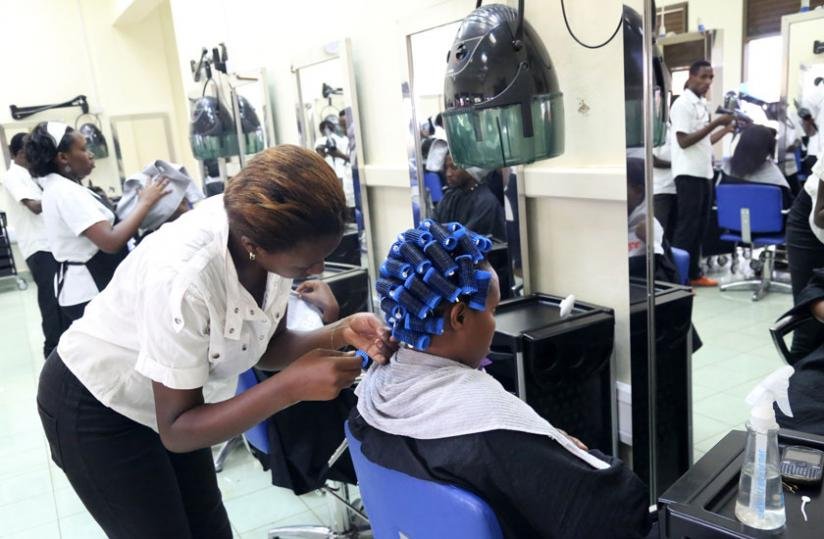
The exercise began in Rwamagana District, where RTB is working with the Rwanda Hairdressers, Nail Technicians and Beauty Professionals Union to assess workers’ skills and help them obtain officially recognised qualifications.
An initial group of 100 people in the district has started taking the assessments.
RTB Director General Eng. Paul Umukunzi told the media that the programme targets people who have acquired practical skills in different trades but lack formal qualifications.
He said certification would help professionals gain recognition, improve their employment prospects and access opportunities in international labour markets.
“For those working in salons, certification will help them gain trust and enable them to seek employment elsewhere, including abroad. Those we find have not yet reached the required standard will be supported to access training,” Umukunzi said.
He added that the programme would initially target 1,200 salon workers before being expanded to reach practitioners across the country.
Uwimana Diane, a resident of Rwamagana District, said she had spent two years working in a salon, where she helps women style their hair. She said she learned the trade through practical experience at a salon after completing secondary school.
“I have been working without a certificate, yet this is a profession I do not intend to leave. Some people wanted to offer me jobs in better salons, but they found that I did not have the required qualifications. If I obtain a certificate, it will also help me find work outside Rwanda and improve my livelihood,” she said.
Nshimiyimana Nazar, a barber who has worked in the profession for five years, said he learned the trade from fellow barbers. He welcomed the government’s initiative, saying the lack of formal qualifications had contributed to disorder in the sector.
“Our profession had become disorganised because someone could come in without knowing how to cut hair and claim to have come from another district. You would give them a clipper, and they would learn how to use it on a customer. We thank the government because this practice is expected to end, and the disorder will be reduced,” he said.
Rushigajiki Haruna, head of the Rwanda Hairdressers, Nail Technicians and Beauty Professionals Union, said the assessments would help establish professional standards and give workers documents proving their competence.
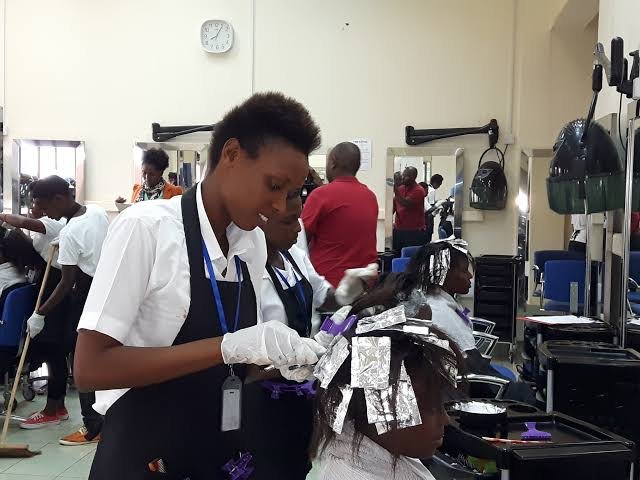
He said the lack of certification made it difficult for employers to determine whether a person had the skills required to work professionally.
“Barbers do not have certificates to prove that they know how to cut hair professionally. This creates a challenge for someone who wants to employ them because they cannot be sure whether the person is qualified. Once they receive certificates, they will be recognised professionals wherever they go in the world,” Rushigajiki said.
He added that the union hoped to complete the training and certification of salon workers across Rwanda within three years. He said the union also intended to introduce measures against employers who hire practitioners without the required professional certification.
More than 30,000 people working in hairdressing, nail care and beauty services are expected to undergo the assessments. Those who meet the required standards will receive certificates issued by RTB.