Christophe Mfizi: The Politician Who Courageously Opposed the Politics of Division.
On April 13, 2026, during a commemoration of politicians who were killed during the 1994 Genocide against the Tutsi, Minister of National Unity and Civic Engagement Dr. Jean Damascène Bizimana spoke about politicians who opposed divisive politics, including both those who were killed and those who survived.

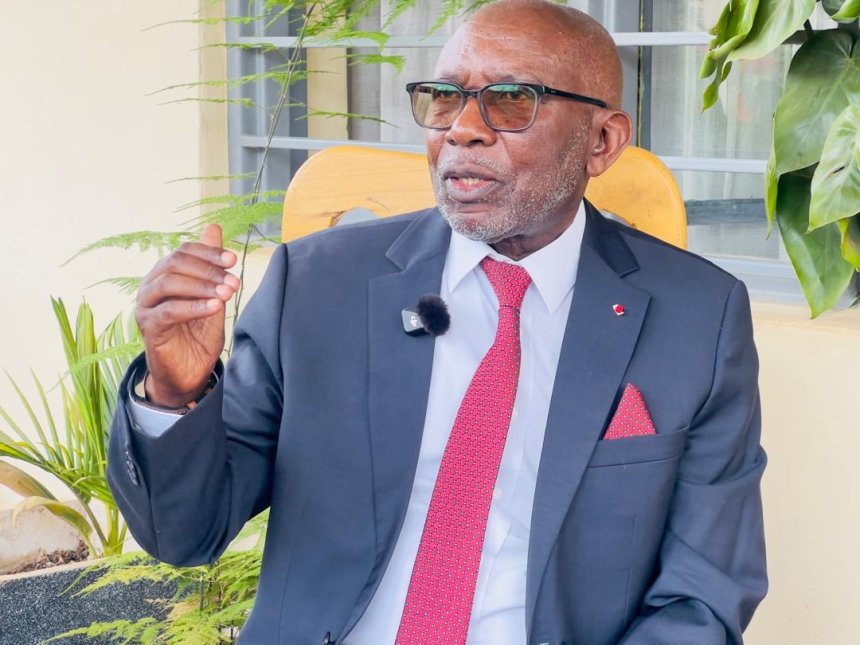
Among those highlighted by Minister Bizimana was Ambassador Christophe Mfizi, a former member of the ruling MRND party who eventually left the party after becoming concerned about the direction in which it was taking the country.
On August 15, 1992, Mfizi wrote to then President Juvénal Habyarimana to announce his resignation from the MRND. In the letter, he strongly criticised the party's political direction and rejected the use of ethnic and regional divisions in governing Rwanda.
“Mr. President, I am pleased to inform you that I am leaving the MRND party. In short, the affairs of the MRND are a mess. I am going in search of a clear sky. Now that thunder is striking from every direction across Rwanda so that the country can renew itself and put on a garment without patches, do you think it will accept a government of division? Setting ethnic groups and regions against each other because it once served a purpose is no longer something on which Rwanda's governance can be based. It will not accept those who take it backwards by cultivating division. I cannot see how I can support such things. Recently, I have heard, at least twice, some MRND leaders cheering for killers and looters, encouraging them to go even further in deliberately violating the law. The party has imposed no punishment on those leaders. I have therefore decided to say goodbye to you, Mr. President, and leave this dark cloud hanging over the MRND. Goodbye. I would rather put the country before you; if I have fallen into servitude, let it be condemned,” the letter reads.
But who exactly was Christophe Mfizi?
What gave him the courage to speak out against policies that were taking Rwanda in the wrong direction?
The answers are contained in an exclusive interview he gave to KP Media.
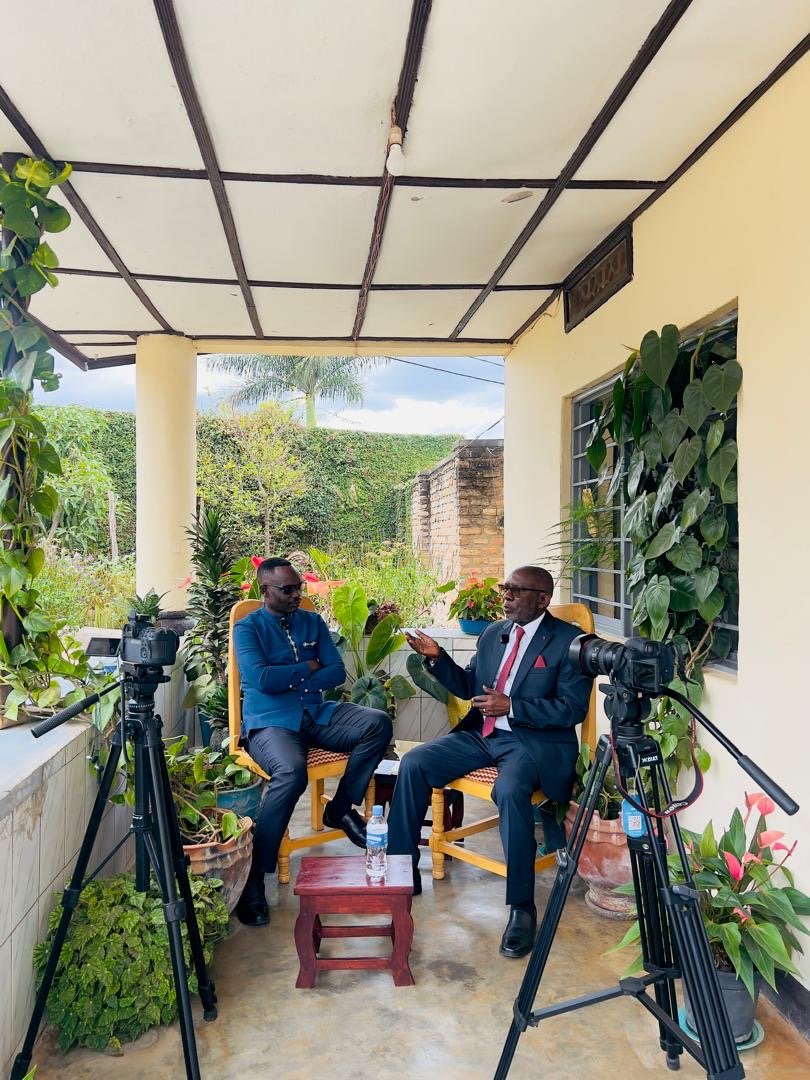
Christophe Mfizi was born in 1944 in Rusororo Cell, Muhororo Sector, in Ngororero District, in Rwanda’s Western Province.
He attended primary school in the Kibirira area, formerly known as Musekera, which was located approximately six kilometres from where his family lived. He completed his final year of primary school in his home area.
In 1957, Christophe Mfizi continued his secondary education at Christ the King School in Nyanza District, in Rwanda’s Southern Province. There, he studied philosophy based on languages related to Latin.
In 1965, Mfizi continued his university studies in Belgium. He studied linguistics at the Catholic University of Louvain, where he obtained his university degree in 1970.
Before joining Rwanda’s national information organization, formerly known as Orinfor, in 1976, Mfizi taught linguistics and history at the National University of Rwanda in 1973.
A year later, in 1974, President Juvénal Habyarimana appointed him head of the teacher-training institution that prepared teachers for secondary schools, formerly known as the Institut Pédagogique National (IPN). He succeeded the late Cyprien Rugamba.
Between 1975 and 1985, Christophe Mfizi says that Orinfor’s main responsibility was to serve as a bridge between the government of the time and the population.
“What we were responsible for at Orinfor was connecting the leaders with the people they governed. That was the objective. In everything we did, that had to be in your mind,” he said.
He explained how Orinfor carried out that responsibility:
“In reality, connecting the leaders and the governed meant bringing the ideas of the leaders of that time to the people. The messages would come down from the President, then to the ministers, then to the prefectural authorities, and finally to the commune authorities, essentially with each level repeating things.”
Mfizi explained that during that period there was something resembling manipulation of information. From the lowest levels of government to the highest levels of the state, it was made to appear that the President’s ideas had been clearly understood by the population and communicated exactly as they had been expressed, yet in reality there was sometimes distortion.
However, Mfizi says that as professional journalists, they sometimes came into conflict with officials at different levels when they conducted investigations to establish how the President’s ideas and programs were actually being implemented.
During those years, Orinfor also faced a shortage of professional journalists and limited equipment.
Through cooperation with international partners, however, the organization helped Radio Rwanda adopt FM broadcasting, while the newspaper Imvaho was developed to a more professional journalistic standard.
Recruiting some of the professional journalists who later became well known required Christophe Mfizi to make considerable personal sacrifices.
He travelled to different parts of the world, including the former Zaire, Cameroon, France and other countries. He did so without having a budget specifically allocated for such trips.
His objective was to attract Rwandans working abroad and others who had studied journalism outside the country so that they could return to Rwanda and work for Orinfor.
Mfizi says that when he entered journalism, one of the major problems faced by journalists in Rwanda was the absence of a specific law governing the profession.
He said:
“Another thing that made things difficult for us was that we worked without a specific law. We had no law that made a journalist different from someone who sells tea, someone who mines stones, or someone working in other government institutions. In short, we had no single law governing us.”
Beginning in 1976, Christophe Mfizi, together with experts from the Catholic University of Louvain in Belgium, worked on a project to draft a law governing the media.
However, he says that some provisions were not adopted, even though they could have helped Rwanda’s media develop in a positive direction.
Those provisions concerned media independence and the ability to provide evidence of wrongdoing committed by anyone, including the President of Rwanda or a foreign visitor, without automatically being accused of defamation.
Mfizi recalled what one professor at the university told him after reviewing the proposed media law:
“I remember that I went to seek advice at the University of Louvain in the communications department, and they received me. At that time, there was an outstanding professor there who told me, ‘If this law is passed, especially this provision and that provision, call us immediately.’ I asked him, ‘Why?’ He said, ‘For two reasons. First, we will know that you are still alive. Second, we will know that Rwanda is an advanced country among all the countries of Africa.’”
The history of Rwanda’s media shows that Rwanda Television, the first television station established in the country, began operating in 1992.
This raises the question: why did Rwanda take so long to establish a national television station?
Christophe Mfizi explained:
“Rwanda was not the only country that was late in establishing television. Television had not yet fully taken root even in Europe. It was very expensive, there were not enough people who had studied it, and until the 1990s, people were basically struggling to survive.”
Mfizi says that the project to establish television in Rwanda had already begun being studied before 1990, particularly through cooperation between Rwanda, several European countries and the International Telecommunication Union (ITU). However, the project was postponed in 1990 when the war to liberate Rwanda began.
During the war, Christophe Mfizi says that cooperation between Orinfor and the leadership of the Rwandan armed forces became increasingly difficult.
The military leadership argued that the national army had been slow in responding to the war. At the same time, it was becoming apparent that the conflict could last for a long time.
Mfizi therefore opposed allowing announcements from the military leadership to be broadcast through Orinfor without verification.
At one point, Colonel Laurent Serubuga, who was then commander of the Rwandan Army, asked him to remove journalist Louise Kayibanda from the radio.
Mfizi recalled:
“There were difficulties, and eventually they even asked me to dismiss a journalist and remove her from the radio. She was a girl called Louise Kayibanda. The commander-in-chief of the army called me and said, ‘That Tutsi girl, do you think she is capable of speaking about the achievements of the Rwandan Army?’ He said, ‘She must go!’ I asked him, ‘What did she do?’ He said, ‘Ah! Don’t you understand?’ I said, ‘I don’t understand.’ He said, ‘You will understand!’”
These difficult relations eventually contributed to the end of Christophe Mfizi’s leadership at Orinfor.
On December 20, 1990, Christophe Mfizi was informed by President Juvénal Habyarimana that he was no longer responsible for leading Orinfor.
Mfizi explained what happened that day:
“The day he called me to tell me, it was the day we were supposed to discuss the media law I had told you about. I went there thinking that was why he had called me, so that I could give him explanations. When I arrived, Colonel Élie Sagatwa, who was President Habyarimana’s private secretary, told me, ‘Leave behind whatever you brought with you; it may not be necessary.’”
Mfizi says that he was not surprised by his removal because he understood that the President had the authority to appoint him and also the authority to remove him whenever he wished.
He said:
“It did not surprise me very much, because the thing that had always protected me was that I would say: I was appointed by the President of the Republic. He has the authority to appoint me, but he also has the authority to remove me whenever he wants. I worked knowing that I could leave the next day. That is how I always worked. I would leave my office with all my things organized, so that whoever replaced me would find everything in order.”
Mfizi says that President Habyarimana appeared to have difficulty telling him about the decision.
He recalled:
“On December 20, 1990, he told me, ‘I have removed you from Orinfor.’ You could really see that it was difficult for him to tell me. Obviously, you could not ask the President why he had made such a decision, but I simply told him, ‘I asked you three times to leave Orinfor. The last time, you told me that you would decide when I would leave. Now you have decided that I should leave. Thank you.’”
Before leaving his position, however, Mfizi had asked the President for permission to explain the proposed media law to the Council of Ministers. The request was accepted.
After leaving Orinfor, Christophe Mfizi joined what was then the Ministry of Higher Education, Scientific Research and Culture, known as MINESUPRES.
He was put in charge of the Department of Culture and Arts, where he worked for nearly two years.
He later moved to Libreville, Gabon, where he worked for the international organization of French-speaking countries then known as the Agence de coopération culturelle et technique.
There, he managed programs covering ten countries in Central Africa.
Although the Genocide against the Tutsi took place while Christophe Mfizi was outside Rwanda, he says that he could see signs of what was happening in the country.
This prompted him, in 1992, to document his concerns in a report called Réseau Zéro.
In the report, he criticized a system of governance that he said was centered around one person, Protais Zigiranyirazo, who was the brother of Agathe Kanziga, President Habyarimana’s wife.
Mfizi says that writing the report was not motivated by resentment over his removal from Orinfor. His objective was to see Rwanda governed through democracy.
“The way I wanted the country to be was for it to be governed democratically. It should not be governed by people who govern from under the President’s arm,” he said.
“Even in Réseau Zéro, I wrote that I was not angry about being removed from Orinfor, because the job I had at the Ministry was not bad. Besides, during that period I was heading the UNESCO Commission and also the Commission of the Agence de coopération culturelle et technique. I had opportunities to travel abroad. I had nothing to complain about,” he added.
After writing the Réseau Zéro report, Christophe Mfizi left the MRND and later became a member of the MDR political party.
The MDR subsequently obtained positions in the transitional government established after the Genocide against the Tutsi was stopped in 1994.
Among the positions held by the party were leadership of the Ministry of Education and several diplomatic posts, including Rwanda’s embassies in Canada, Germany, Switzerland and France.
This is how, in November 1994, Christophe Mfizi became Rwanda’s Ambassador to France.
Mfizi says that serving as ambassador was challenging, particularly because diplomatic work was new to him.
“What was difficult was that the MRND and the RPF did not agree well, so instructions did not always reach the ambassadors properly. People in Rwanda were not very accustomed to communicating with their ambassadors. France was also difficult. Yes, we had worked together before, but by then I was defending Rwanda while they were really opposing it,” Mfizi told KP Media.
Looking back at the difficult historical periods Rwanda went through, Christophe Mfizi says that he was able to navigate them because of love.
“One thing I would really tell young people is: learn how to remove hatred from your heart. Whatever happens, do not allow another person to make you hate. It is not about pretending to be a saint, but it is something a person can do if they want to. That is one of the things that helped me greatly! It prevents you from acting impulsively when you are angry with someone. It prevents you from simply attacking someone because they come from this or that ethnic group, this or that region, or because they are white. That is also what made me keep Louise Kayibanda on the microphone,” he advises.
When speaking with people, Christophe Mfizi often refers to the Rwandan proverb:
“Inda ibyara mweru na muhima.”
The proverb refers to the idea that the same parent can give birth to children who are very different from one another.
Mfizi frequently uses the proverb because his younger brother is Dr. Léon Mugesera, who became known for a speech delivered in Kabaya that contained discriminatory and inflammatory rhetoric.
Mfizi explains that when he uses the proverb, he is not trying to draw attention to himself. Rather, he wants people to remember his elder brother, Thadée Ngirabatware, who demonstrated courage by hiding Tutsi people when they were being hunted.
Mfizi questions why some people do not see him for who he is, or through the actions of his elder brother Ngirabatware, but instead judge him through the image of his younger brother Léon Mugesera.
Christophe Mfizi concluded by thanking Rwanda’s leadership for stopping the Genocide against the Tutsi and for continuing to work hard to ensure that Rwanda survives and develops.
He also called on all Rwandans to listen to and implement the advice of their leaders, saying that the leadership is always seeking what is best for the country.
Throughout his career, Mfizi held numerous positions in education, journalism, government, international organizations and diplomacy.
In 2014, he also served on a committee that examined the content of a BBC documentary broadcast that year and widely disputed, Rwanda’s Untold Story.