DR Congo Withdraws OIF Candidate, Backs Romania’s Dacian Cioloș.
The Democratic Republic of Congo (DRC) has withdrawn Juliana Amato Lumumba from the race for Secretary-General of the International Organisation of La Francophonie (OIF) and announced its support for Romania’s candidate, Dacian Cioloș, in a move aimed at building consensus ahead of the November 16 election.

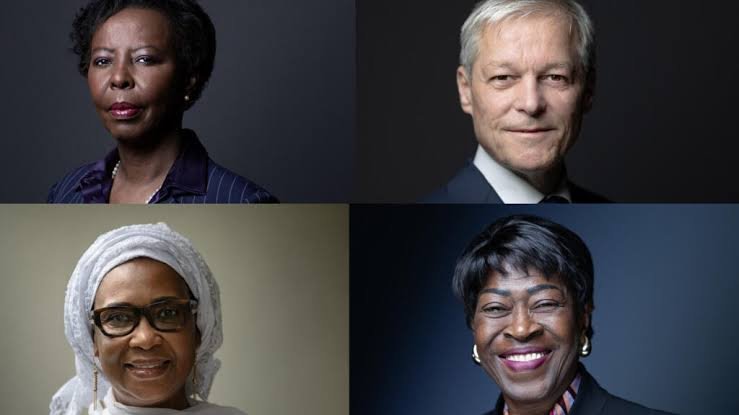
The decision was announced on November 14, 2026, in Phnom Penh, Cambodia, where foreign ministers from Francophonie member states were attending the organisation’s 48th ministerial conference.
In a statement, the DRC Ministry of Foreign Affairs said Lumumba’s withdrawal was intended to help member states agree on a candidate capable of bringing different sides together.
“The DRC announces the withdrawal of Juliana Amato Lumumba’s candidacy for the position of OIF Secretary-General, with the aim of reaching consensus on a candidate who can unite the different sides,” the ministry said.
The Congolese government thanked Lumumba for her commitment to the campaign, stressing that her withdrawal should not be interpreted as a reflection of doubts about her abilities or what she could have contributed to the organisation.
Kinshasa said the decision was also intended to ease tensions that had emerged during the process of selecting the next Secretary-General. It reaffirmed its commitment to a Francophonie based on cooperation, respect for the organisation’s rules and shared values.
Following discussions between the DRC and Romania, the ministry said Kinshasa had chosen to support Cioloș, a former Romanian prime minister.
“The withdrawal of the Congolese candidacy opens the way for cooperation in support of Dacian Cioloș, the candidate put forward by Romania, who is now supported by both countries,” the statement said.
The move comes amid diplomatic efforts, led in part by France, to secure agreement on a single candidate and avoid a divisive election. The contest has become entangled in tensions between Rwanda and the DRC, with Kinshasa previously threatening to leave the organisation if Rwanda’s Louise Mushikiwabo secured a third term.
Rwanda rejects pressure to withdraw Mushikiwabo.
Rwanda’s Minister of Foreign Affairs and International Cooperation, Olivier Nduhungirehe, has confirmed that France asked Rwanda to withdraw Mushikiwabo’s candidacy, but said Kigali had no obligation to comply with another country’s request.
Speaking to Rwanda Broadcasting Agency (RBA), Nduhungirehe was responding to a report by Jeune Afriquepublished on November 13, which said French President Emmanuel Macron had written to President Paul Kagame urging him to withdraw Mushikiwabo from the race in the interests of the OIF.
According to the report, Macron sent the message during the night of November 12-13, seeking to secure consensus around Cioloș and prevent the DRC from leaving the organisation.
Macron reportedly said that Congolese President Félix Tshisekedi and Mauritanian President Mohamed Ould Ghazouani were also prepared to withdraw their countries’ candidates. The candidates concerned were Lumumba, who has now withdrawn, and Mauritania’s Coumba Bâ.
The French president wanted Cioloș, a former Romanian prime minister, to emerge as the consensus candidate. He reportedly urged Rwanda to announce Mushikiwabo’s withdrawal before the November 14 ministerial conference.
The report said the effort was intended to prevent an election from deepening divisions within the organisation, particularly given the DRC’s threat to leave if Mushikiwabo won another term. Macron had reportedly also considered former Senegalese president Macky Sall as a possible candidate before pursuing the plan centred on Cioloș.
Nduhungirehe confirmed that France had made the request but argued that it was inconsistent with the OIF’s rules and the rights of its member states.
“It happened, but it is not in accordance with the rules of the Francophonie. Rwanda is not a country that takes instructions from another country, no matter how wealthy it may be. No country can give itself the right to tell another country that has presented a candidate to withdraw that candidate. That is Rwanda’s right, just as it is the right of all 53 countries that make up the Francophonie,” he said.
He added that member states should first seek consensus, as provided for under the organisation’s rules, but proceed to an election if no agreement is reached.
“What needs to be done is to seek consensus, as the rules provide. There are now three candidates remaining. If consensus is not possible, we will go to an election. But the old Francophonie, where one country believed it could make decisions for everyone, is over,” Nduhungirehe said.
Rwanda cites changes to OIF election rules.
To explain why he believed the approach proposed by France was no longer appropriate, Nduhungirehe referred to the 2014 Francophonie summit in Dakar, Senegal.
At the time, several candidates were seeking to succeed Abdou Diouf, who had led the organisation for 12 years. They included Henri Lopes of Congo-Brazzaville, former Burundian president Pierre Buyoya and Jean-Claude de l’Estrac of Mauritius. Canada had also nominated Michaëlle Jean, its former Governor General.
The leaders attending the summit initially failed to agree on a candidate. France, then led by François Hollande, took part in efforts to reach consensus, and Jean was eventually elected after the other candidates withdrew.
Nduhungirehe said the process had since changed because the OIF adopted clearer rules governing the election of its Secretary-General.
In 2022, the organisation revised the rules governing its institutions and established a formal procedure for selecting the Secretary-General. Under the rules, member states must first seek consensus. If they fail to reach an agreement, a secret ballot is held, with the candidate receiving the highest number of votes declared the winner.
The vote is conducted by heads of state and government or representatives of the 53 full member states entitled to participate in the election.
Although the OIF comprises 90 states and governments, its five associate members and 32 observer states do not have voting rights in the selection of the Secretary-General.
If candidates receive an equal number of votes, another round of voting is held until one candidate secures more votes than the others.
The Secretary-General serves a four-year term. The rules do not set a maximum number of terms, allowing an incumbent to seek re-election through the established process.
Conflicting statements emerge over Lumumba’s withdrawal.
Although the DRC’s Foreign Affairs Ministry announced Lumumba’s withdrawal and its support for Cioloș, two versions of the ministry’s statement reportedly emerged, both carrying the same date and headline but using different wording.
One version said the DRC had already withdrawn Lumumba’s candidacy. The other said the country had expressed its willingness to consider withdrawing it.
The distinction was also reflected in the French wording. One statement used “a annoncé le retrait de la candidature” — announced the withdrawal of the candidacy — while the other used “a exprimé sa disposition à envisager le retrait de la candidature” — expressed its willingness to consider withdrawing the candidacy.
There was a similar difference over support for Cioloș. One version said the DRC and Romania had agreed to back him, while the other indicated that Kinshasa was prepared to consider cooperation with Bucharest in supporting his candidacy.
The differences leave some uncertainty over the precise status of the DRC’s decision, despite the ministry’s announcement that Lumumba was withdrawing and that Kinshasa would support Cioloș.
Election takes place amid Rwanda-DRC tensions.
The leadership contest is unfolding against the backdrop of strained relations between Rwanda and the DRC, largely linked to insecurity in eastern Congo.
The DRC accuses Rwanda of supporting the AFC/M23 armed group, allegations that Kigali has repeatedly rejected. Rwanda has argued that the security crisis in eastern Congo has deep-rooted causes requiring a lasting solution.
Meanwhile, Rwanda accuses the DRC of collaborating with and providing support to the Democratic Forces for the Liberation of Rwanda (FDLR), an armed group that includes individuals implicated in the 1994 Genocide against the Tutsi. Kigali has repeatedly accused the group of posing a security threat to Rwanda and seeking to destabilise the country, while alleging that Congolese authorities support its activities. The DRC-Rwanda dispute over the FDLR and the AFC/M23 conflict in eastern Congo has further strained relations between the two neighbouring countries.
The dispute has also affected the OIF leadership race. President Tshisekedi had previously indicated that the DRC could leave the organisation if Mushikiwabo won a third term.
Mushikiwabo, who has already served two terms as Secretary-General, is seeking re-election for another four years. The vote is scheduled for November 16 during the 20th Francophonie Summit in Phnom Penh.
With the DRC now backing Cioloș and Rwanda maintaining support for Mushikiwabo, the remaining question is whether member states can reach consensus before the vote or whether the organisation will proceed with the secret ballot set out in its rules.
The outcome will test the balance between diplomatic efforts to agree on a single candidate and the right of member states to choose their preferred leader through the formal election process.