Dafroza Gauthier Dies at 72 After Decades of Pursuing Genocide Justice.
Dafroza Mukarumongi Gauthier, a Rwandan-born campaigner who spent more than two decades helping efforts to bring people accused of participating in the 1994 Genocide against the Tutsi to justice in France, has died at the age of 72.

News of her death emerged on October 3, 2026. She died following an illness.
Gauthier was the co-founder of the Collectif des Parties Civiles pour le Rwanda (CPCR), an organisation established to support legal efforts to bring people suspected of involvement in the Genocide against the Tutsi who were living in France before courts. She founded the organisation in 2001 with her husband, Alain Gauthier.
The couple's work began several years earlier. In 1996, they returned to Rwanda after the genocide and started collecting testimonies concerning people suspected of participating in the killings. They repeatedly travelled across the country, meeting survivors and gathering information that could support investigations and court cases in France. Alain Gauthier has described how the couple collected testimonies before establishing the CPCR in 2001.
Dafroza's role was particularly significant because she spoke Kinyarwanda, understood Rwanda's history and was trained as a chemical engineer. She helped translate testimonies and other documents collected in Rwanda into French so they could be used by lawyers and French judicial authorities.
The Gauthiers' investigations involved travelling to places where crimes had been committed, identifying survivors and collecting testimonies and other evidence. According to accounts of their work, they filed around 30 complaints over more than two decades, while the CPCR also joined existing cases as a civil party.
Their work contributed to a number of major genocide trials in France, including cases involving Philippe Hategekimana, Laurent Bucyibaruta and Eugène Rwamucyo. Rwamucyo was sentenced in France to 27 years in prison after being convicted of genocide-related crimes and crimes against humanity.
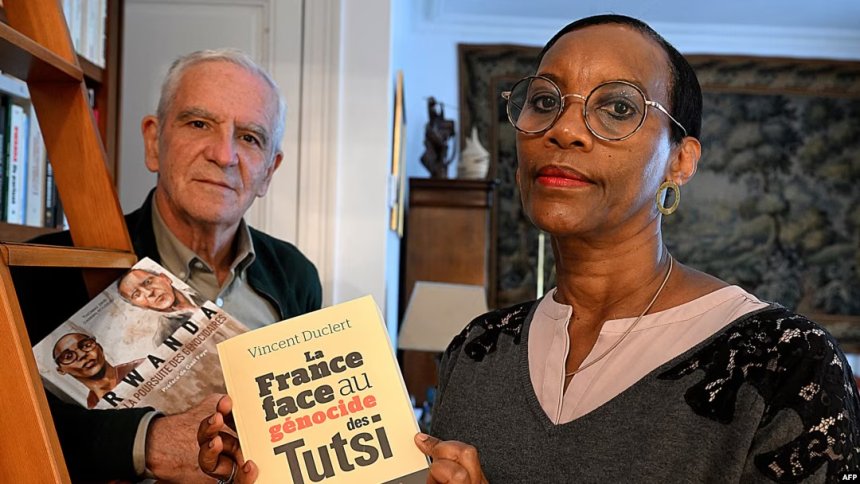
Beyond the courtroom, Dafroza and Alain Gauthier worked to preserve the memory of the Genocide against the Tutsi. They visited schools and universities to speak about the genocide and the importance of confronting genocide denial and minimisation.
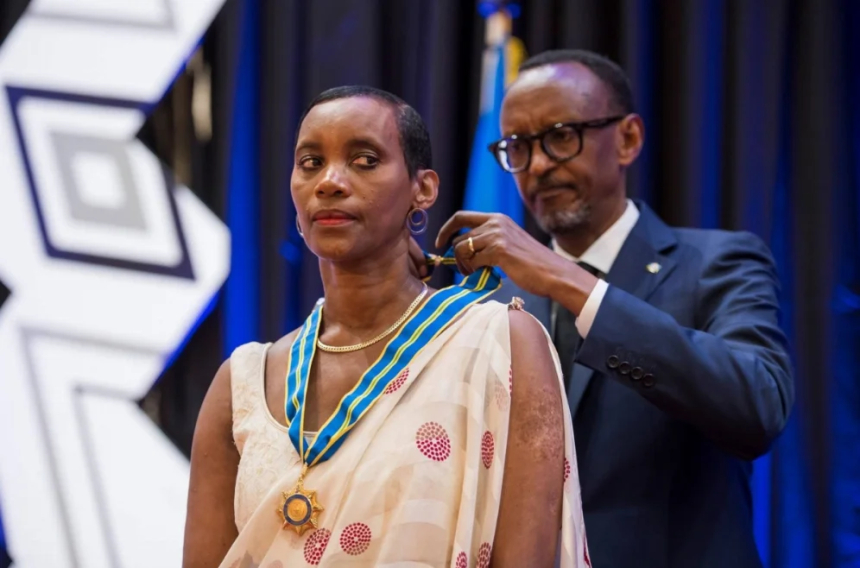
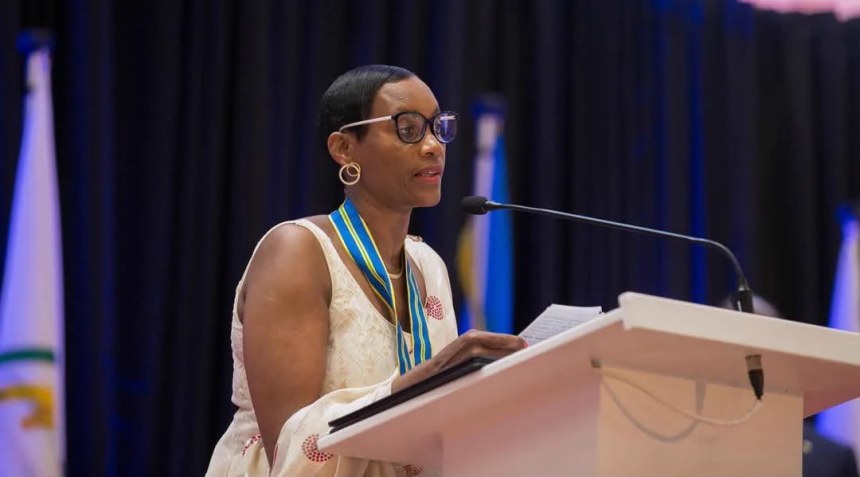
Rwanda also recognised their contribution. On November 18, 2017, President Paul Kagame awarded Dafroza and Alain Gauthier the Order of the Friendship of Rwanda, Igihango, for their efforts to help bring people involved in the genocide to justice and for their contribution to Rwanda's image internationally.
Dafroza's commitment to the pursuit of justice was deeply connected to her own family history.
Born on August 4, 1954, in the former Butare Prefecture, she experienced violence against Tutsi from an early age. Her father was killed in the former Gikongoro in 1963, when she was nine years old.
She later left Rwanda following the persecution of Tutsi in 1973 and eventually settled in France. There, she met Alain Gauthier. They married and had three children.
In February 1994, Dafroza returned to Kigali to visit her family. She left after her mother warned her about the deteriorating security situation and attempted to persuade relatives to flee with her, but they remained behind.
During the Genocide against the Tutsi, more than 80 members of her family were killed, including her mother, Suzana Mukamusoni, who was shot in April 1994.
The loss of her family became central to Dafroza's later work. Together with Alain, she devoted much of her life to ensuring that survivors' testimonies were heard and that people suspected of participating in the genocide and living in France faced judicial proceedings.
Their decades-long campaign has also been documented in the 2023 graphic book Rwanda, à la poursuite des génocidaires. Written by journalist Thomas Zribi and illustrated by Damien Roudeau, the book follows the couple's investigations and their efforts to pursue genocide suspects who fled to France. Writer and artist Gaël Faye wrote the foreword.
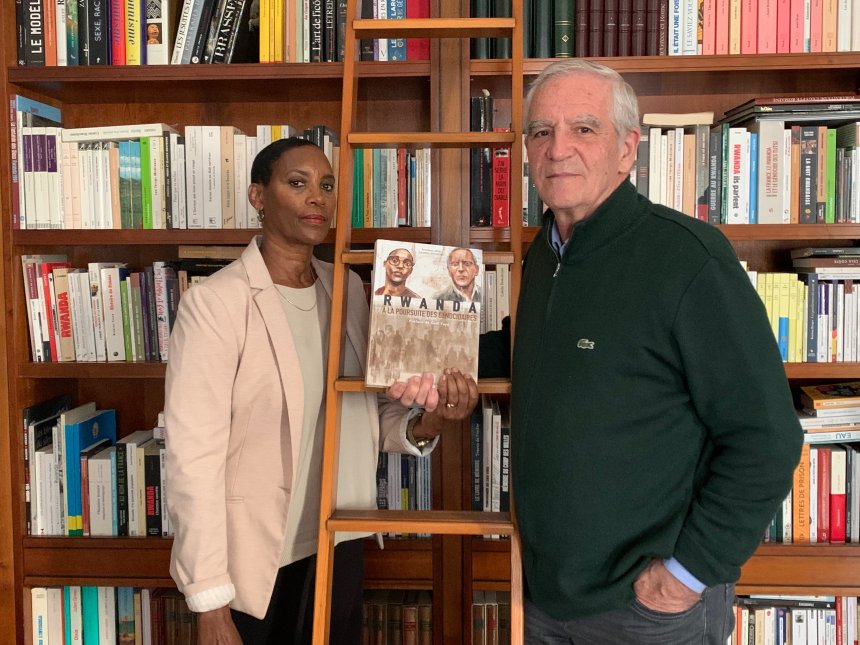
The book describes a campaign that required repeated journeys to Rwanda to locate survivors, gather evidence and support legal proceedings in France.
Dafroza Gauthier leaves behind a legacy centred on remembrance, the pursuit of justice and efforts to ensure that survivors of the Genocide against the Tutsi are not forgotten.