Rwanda Financial Institutions Showcase Agricultural Finance Products for Youth and Women
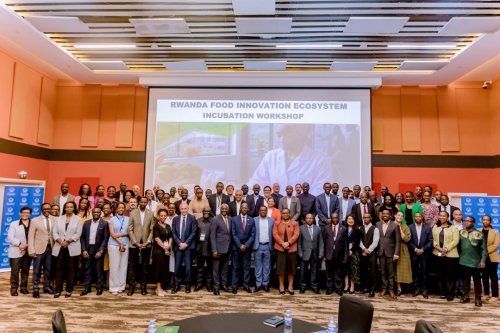
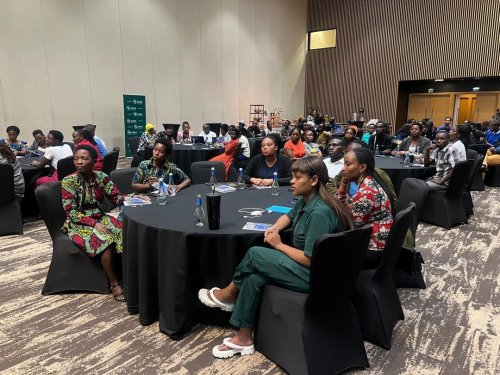
KIGALI, Rwanda — 2 October 2026 — AGRA, in collaboration with the Ministry of Agriculture and Animal Resources (MINAGRI), with support from the Mastercard Foundation, on Friday convened an Agricultural Financial Products Awareness, Linkage and Coordination Session in Kigali to connect farmers, agribusinesses, young people and women with financial institutions and improve access to financing for agricultural businesses.


The session brought together financial institutions and agricultural businesses to discuss available financing products, eligibility requirements and practical barriers to accessing credit.
The products presented covered different stages of the agricultural value chain, including production, input financing, aggregation, processing, post-harvest handling, equipment, working capital and export financing. Such products can help farmers and agribusinesses increase production, acquire equipment, manage seasonal cash-flow needs, add value to agricultural products and expand their businesses.
For young agripreneurs, however, understanding financial products is only part of the challenge.
Evariste Sibobugingo, Youth in Agribusiness Forum Coordinator in Nyanza District, said young people are increasingly learning about financial products offered by banks but often encounter different requirements when they approach bank branches.

“We have learned about different financial products offered by banks, and we understand which products could be useful for us as young people in agriculture. However, the challenge comes when we try to follow up with the banks at branch level.”
He said collateral requirements and transaction thresholds can make financing difficult for young businesses that are still growing.
“If I am applying for a loan of RWF 20 million, for example, I may be asked to transact RWF 60 million within a month. Where can I get that kind of money when I am still trying to grow my business?”
Peter Okomoh, AGRA Country Program Lead in Rwanda, said the engagement was intended to create practical connections between financial institutions and agricultural businesses.

“The opportunity that we see is really for practical linkages, and the purpose of today’s engagement is to create those linkages.”
He added:
“We want to see young people freely interact with financial service providers, understand the requirements and opportunities, and, much more importantly, access funding for their businesses.”
Dr. Kamana Olivier, Permanent Secretary at MINAGRI, said financing needs to reach agricultural businesses at the right time and under appropriate conditions.
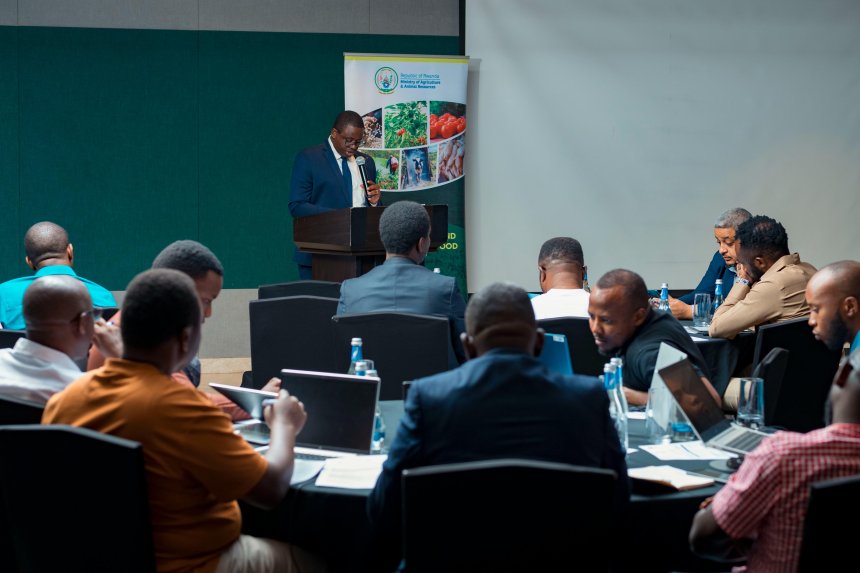
“We must ensure that financing reaches farmers and businesses at the right time, with appropriate terms and in ways that support productivity, value addition and employment.”
Financial institutions highlighted different ways their products can support agricultural businesses, from financing production and working capital to equipment, value addition, aggregation and market expansion.
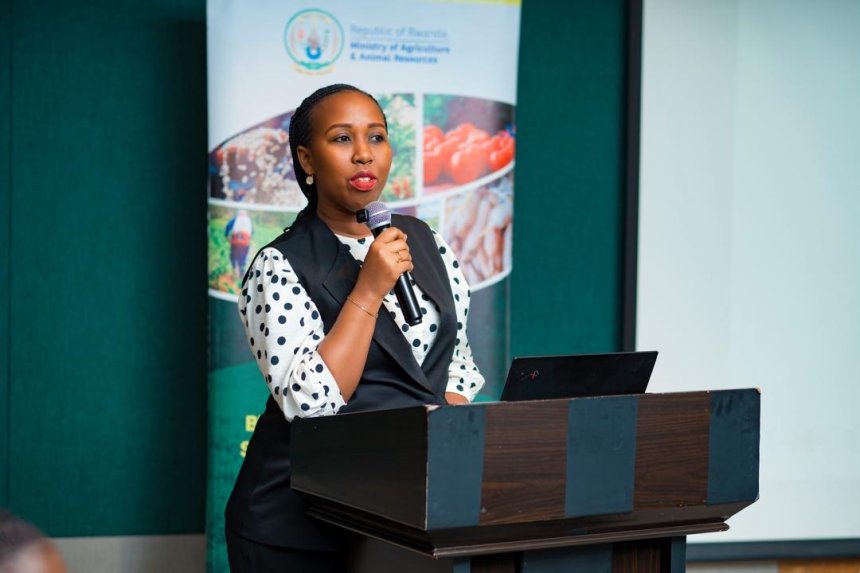
Bank of Kigali highlighted guarantee mechanisms that can help businesses facing collateral constraints.
“For those who don’t have enough collateral to cover their loans, we do have some guarantees, and they should come to us so we can help them with those guarantees,” the bank representative said.

BPR Bank Rwanda highlighted the importance of combining financing with technical support to address challenges associated with agricultural businesses.
“Money has never been the challenge; the challenge has been the seasonality aspect and the technical assistance that goes to support agribusiness,” the BPR representative said.
Figures cited from the National Bank of Rwanda (BNR) show that new lending to agriculture increased by 177 percent in the first half of 2026, while agriculture’s share of overall new lending rose from 2.5 percent to 5 percent.

The session sought to strengthen the link between financial institutions and agricultural businesses, particularly youth- and women-led enterprises, by improving awareness of available products and creating direct opportunities for potential borrowers to engage with lenders.