Hon. Charles Murigande: From Mathematics Scholar to Veteran Politician and Servant of God.
Among the distinguished names in Rwanda’s political history, Hon. Charles Murigande is certainly one of them, having served the country in various senior government positions.

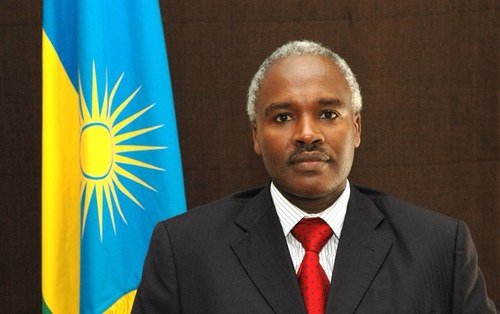
Among other responsibilities, Hon. Charles Murigande served as Rwanda’s Minister of Foreign Affairs and Regional Cooperation from November 15, 2002 until March 2008. Following the March 2008 cabinet reshuffle, he became the first Minister of Governmental Affairs, a position he held until July 26, 2009, when he was appointed Minister of Education. He served as Minister of Education until May 2011. On May 6, 2011, Hon. Charles Murigande was appointed as Rwanda’s Ambassador to Japan, with concurrent accreditation to Australia, New Zealand, Thailand and the Philippines. He formally presented his credentials to Emperor Akihito on October 4, 2011 and served in Tokyo until April 2015.
On August 10, 2016, Hon. Charles Murigande was appointed Deputy Vice Chancellor for Institutional Advancement at the University of Rwanda, a position he
held until his retirement from public service in June 2020. Later, on December 1, 2025, Hon. Charles Murigande was appointed to the Senate by President Paul Kagame. He subsequently took the oath of office as a Senator on December 11, 2025.
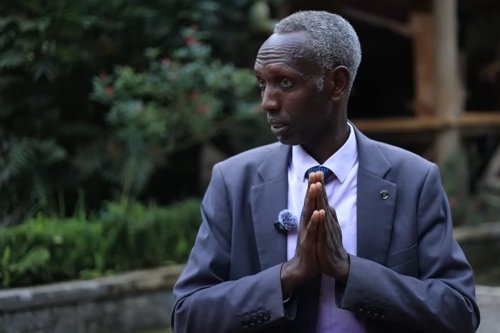
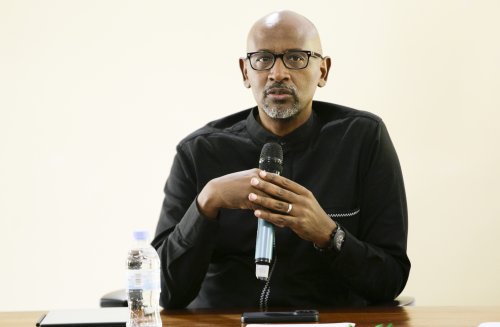
Hon. Charles Murigande recently spoke to KPMedia, sharing his life journey, from becoming a mathematics scholar and an experienced politician to embracing Christianity. He also shared advice to leaders and citizens on how Rwanda can continue advancing on its path of development.
Hon. Charles Murigande was born on August 15, 1958, in Gashiru Village, Bitare Cell, Ngera Sector, Nyaruguru District, in Rwanda’s Southern Province. However, he did not spend his childhood in Rwanda. At just three years of age, his family fled to Burundi, where he completed his primary and secondary education and the first two years of university.
He later continued his studies in Belgium, where he obtained university degrees, eventually earning a PhD in Mathematics with outstanding results.
Speaking about how he felt when he learned that he had achieved excellent academic results despite being a refugee, Hon. Charles Murigande told KPMedia:
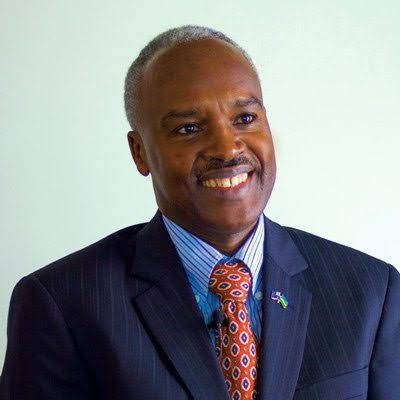
“I cannot tell you that I felt a particular way. I felt it was something normal. I felt that I had studied, so I had to pass.”
He says that his determination to work hard and succeed was partly shaped by his teachers at Saint Albert School in Burundi. Many of his teachers were Rwandans who encouraged their students to study diligently and strive for excellence. In addition, educational opportunities for Rwandans were limited, which made those who had access to them determined not to waste them.
Although Hon. Charles Murigande eventually earned PHD degree in mathematics, mathematics was not originally the field he wanted to pursue. His dream was to become a medical doctor.
He explained to KPMedia how he ended up studying mathematics instead of medicine:
“When I was studying, I wanted to become a doctor. What inspired me to become a doctor was the desire to emulate the people who had devoted themselves to us. I would ask myself, ‘How can a person do such good work?’ I thought that if I became a doctor, I would care for people and treat them with love and dedication, rather than putting them outside and telling them that it was time to go home.”
“When we finished school, there was an entrance examination for the polytechnic school. Students who were considered academically strong in mathematics and physics would take it. The school administration urged me to sit for the examination, even though they knew I did not intend to study technical subjects. When students took and passed the examination, it improved the school’s academic record. So I went and took it, and, unfortunately, I came first in the examination,” he added.
“Perhaps that was exactly what the school wanted, but it meant that I could not study medicine, because the university said that someone who had come first in the technical examination could not then go and study medicine. The technical school offered courses in engineering, physics and mathematics, so I ended up studying mathematics,” he explained.
While working in the United States, Hon. Charles Murigande considers his decision to work in Washington, D.C., rather than Fayetteville, North Carolina, to have been part of God’s plan.
Looking back, he says that being in Washington enabled him to make an important contribution to the Rwanda’s liberation process.
“I sometimes look back and say, ‘This is how God directs a person’s steps.’ I look at the contribution I made during the process of liberating Rwanda. If I had been in Fayetteville, I would not have been able to make that contribution. But because I was in Washington, and because I understood the organization, I became an advocate for the RPF there. When senior leaders of the organization came to Washington, I would guide them, arrange different appointments with different people and do other things,” he said.
“I think God took me to Washington because He knew that I would be needed there in the process of liberating Rwanda,” he added.
Hon. Charles Murigande says that much of the strength he has drawn upon throughout his political career comes from Christianity. He recalls biblical figures who also played leadership roles, including Moses, Joseph and David.
For him, politics is a means of leading and helping people move from difficult circumstances toward a better life. He believes that this understanding of leadership is consistent with Christian principles.
Hon. Charles Murigande says he embraced Christianity in the first day of 1978.
“At the school we attended, there were students who had already been Christians. During the lunch break and in the evening before study sessions, they would hold prayers. At first, we would mock them and call them the outrageous names. But I began asking myself, ‘How can someone ridicule something they have not even understood?’ I decided to go and listen to what it was all about, understand it and analyse it. I told myself that if I found it was a waste of time, I would mock them and insult them, saying, ‘I have analysed these things and found that they deserve to be criticized, mocked and rejected.’ So I went, and I found myself accepting salvation,” he told KPMedia.
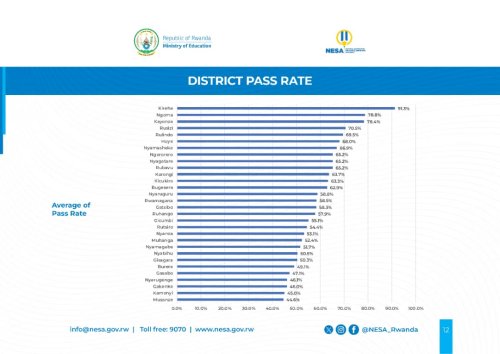
Although he pursued much of his education abroad, Hon. Charles Murigande takes pride in having contributed to the development of Rwanda’s education sector.
Of all the responsibilities he has undertaken in service to the country, he says his work in education brought him the greatest satisfaction.
“I was very happy to teach Rwandan children. Teaching is a wonderful thing because you are preparing the future of the people who will come after you, and you are also preparing a better future for the country,” he explained.
Between 1998 and 2002, Hon. Charles Murigande served as Secretary General of the RPF Inkotanyi.
When President Pasteur Bizimungu resigned in 2000, Hon. Charles Murigande and President Paul Kagame were selected by the organization, with one of them to be chosen as President of the transitional government.
Explaining what happened, he said the process was guided by the laws governing the transitional period. Had the law provided for only one candidate, he said, President Paul Kagame would have been chosen.
He also clarified that the two did not campaign for the position. After being selected at an RPF Inkotanyi congress, members of Parliament and the Cabinet voted to determine who would lead the country.
Hon. Charles Murigande also recalled an interview he had with a BBC Gahuzamiryango journalist in 2003. The journalist asked him whether there were Rwandan troops in Ituri, in the Democratic Republic of Congo. Murigande responded that there were none.
The journalist then asked him to swear before God that there were no Rwandan troops there. Murigande responded that God’s truth is found in the Bible, while he was telling him what he considered to be factual human truth.
To dispel the impression that he was attempting to hide the truth, Hon. Charles Murigande explained the distinction he was making:
“God’s truth belongs to God. God’s truth is found in the Bible. Factual truth is human truth. If I tell you that I climbed the stairs on foot and did not use a lift, and I want to tell you that this is factual truth, I cannot tell you that it is God’s truth. How can I bring God into such a matter?”
Reflecting on Rwanda’s situation 32 years ago compared with where the country stands today, Hon. Charles Murigande believes that the progress achieved is largely the result of good leadership that cares about citizens, takes measures to protect them and promotes national unity.
However, he believes there are behaviours that citizens, particularly young people, must avoid if Rwanda is to maintain its development trajectory.
He identified putting personal interests first rather than the common interest, embracing corruption and complacency as major threats to national development. In his view, such attitudes can undermine and even destroy the progress that has already been achieved.
Hon. Charles Murigande also addressed the ongoing campaign against substandard and illicit alcoholic drinks. He believes that national development depends on citizens being healthy and having a positive vision in their lives.
He warned against consuming certain alcoholic drinks whose names themselves highlight their harmful effects on people's health.
“When you hear that someone can drink a beverage called ‘Donda Ubwonko’ [Destroy the Brain] or ‘Muriture’ [Kill Him/Her], what exactly are you looking for? You have already given up on yourself and want to commit suicide!”
Hon. Charles Murigande also called on leaders to find ways of preventing the spread and consumption of pornographic content, particularly among young people.
Using China as an example, he said:
“In China, it is not possible to access pornographic content. It is prohibited. They have advanced technology that blocks websites displaying pornography, and no one can simply say, ‘Because you have done this, we are going to impose sanctions on you.’”
He believes Rwanda could explore similar technological solutions.
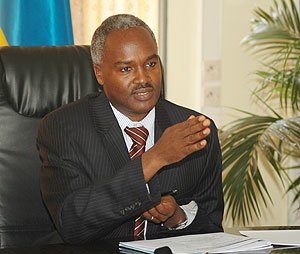
“Here too, if we want to help our young people in a sustainable way, we have already made significant technological progress. The Ministry of ICT and Innovation and institutions under it, such as RISA, as well as other institutions specializing in cybersecurity, should look into ways of protecting Rwandan children from accessing websites that display pornographic content,” he argues.
“This is how children end up dying. Others commit suicide. There are websites that explain easy ways to commit suicide. When someone experiences a small problem and reaches such a website, they may immediately go down that path. In order to protect what we have achieved and ensure that we continue moving forward rather than becoming stuck here, strong measures should also be taken in this area,” he added.
Hon. Charles Murigande further urged young people to avoid excessive material desires, arguing that greed can lead people to kill one another and can also drive individuals into drug abuse as they attempt to suppress the emotions associated with their actions.
He stressed that excessive attachment to material possessions ultimately has no lasting value because everything a person owns will eventually be left behind on earth.
The responsibilities Hon. Charles Murigande has held have been significant, but people who have worked with him describe him as a very humble person.
He attributes his humility to a simple belief: he does not consider himself extraordinary.
“What has helped me is understanding that I am not extraordinary. There is nothing I have that I was not given freely through God’s grace working through people. All those positions were given to me by the leadership of the RPF and the leadership of Rwanda. But I believe that the reason I was given those positions is because God worked through those people,”he said.
“It is God, first and foremost, who gave me life. It is God who enabled me to study. It is also God who continues to enable me to perform the responsibilities I have been given, which leads to me being entrusted with one responsibility after another. Therefore, there is no reason for me to put myself above others,”he added.
Another factor that has helped him remain humble, he said, is that he has never viewed the positions he held as rewards.
Instead, he considered every position an opportunity to serve others and make a difference in their lives by being a servant to them.
In conclusion, Hon. Charles Murigande urged leaders not to focus on themselves but to dedicate themselves fully to improving the lives of those they lead.
He encouraged leaders to see themselves as servants of the people and to strive to leave behind a positive legacy for those who will come after them.
In his view, if Rwanda had more leaders with this mindset, the country and its people would progress even further than they have today.